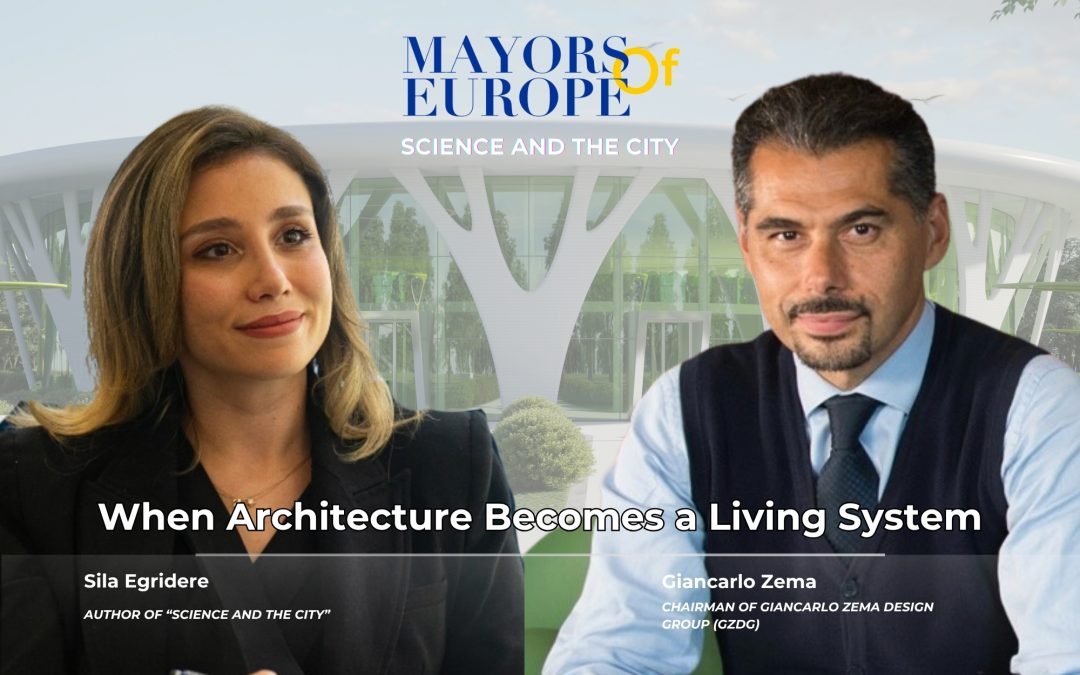
When Architecture Becomes a Living System: Giancarlo Zema on nature, infrastructure, and the future of cities
InterviewsNewsScience and the city
by Sila Egridere
For a long time, cities have been designed as collections of separate parts. Buildings were buildings. Roads were roads. Parks were parks. Energy systems remained mostly invisible. Infrastructure worked in the background, treated as something technical rather than something cultural, social, or emotional.
But the next generation of cities may not survive this separation.
Climate pressures, population density, mobility shifts, and resource scarcity are already forcing urban systems to operate differently. The question is no longer whether cities need to change. The deeper question is how this change should be imagined, designed, financed, and experienced by people.
This is where the work of Italian architect Giancarlo Zema becomes particularly relevant. His practice moves between architecture, environment, advanced infrastructure, floating habitats, energy-integrated systems, and public spaces. Yet the most interesting part of his work is not simply its futuristic appearance. It is the way it asks architecture to become part of a larger urban metabolism.
In his view, architecture is not only a matter of form. It is a living interface between nature, technology, social life, and economic reality.
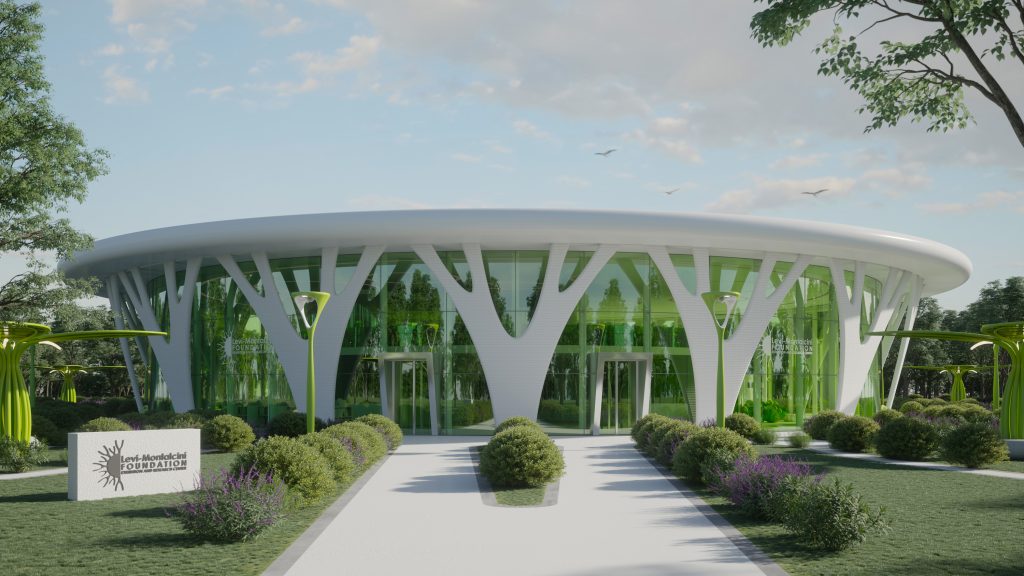
Photo: Gianrcarlo Zema Design Group
Nature as an operating manual
When asked what connects his projects most strongly, Zema does not begin with technology. He begins with emotion, sustainability, and communication. For him, architecture should express a broader concept of sustainability, one that is environmental, social, and economic at the same time. He describes this as the “fil rouge”, the common thread, running through all his work: the conviction that emotional resonance, ecological intelligence, and economic viability do not have to be separate goals.
This is important because much of the built environment still treats sustainability as a technical upgrade. A building receives better systems, better materials, better performance values. But Zema’s answer points toward a more integrated idea: sustainability is not an addition to architecture. It is the logic through which architecture should be conceived.
His strongest reference point is nature.
He describes spending entire days observing the animal kingdom and the world of plants. Nature, he argues, already knows how to obtain energy from the sun, wind, and earth. It knows how to adapt to changing environments. The role of designers is to study, understand, and emulate it.
This may sound poetic, but it is also highly practical. Nature is not only a visual inspiration. It is a system of intelligence. It produces, adapts, circulates, protects, and regenerates. For cities struggling with heat, energy demand, waste, flooding, and social fragmentation, this kind of thinking becomes more than a design philosophy. It becomes a survival strategy.
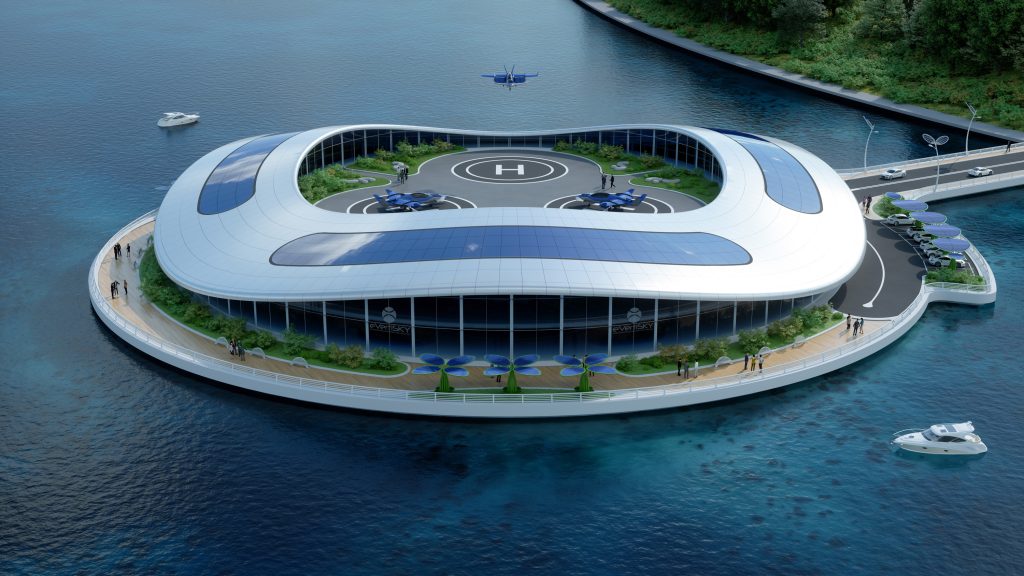
Photo: Gianrcarlo Zema Design Group
The difficulty of making beauty work
One of the most revealing parts of the interview is Zema’s reflection on the gap between vision and implementation. Travelling the world, he says, “ what is beautiful is not functional, what is functional does not always excite, and when beauty and function come together, economic sustainability is often missing.”
This sentence quietly exposes one of the central problems of contemporary urban innovation.
Cities are full of promising concepts that fail to move beyond renderings, pilot projects, or isolated showcases. Not always because the technology is missing. Often, the missing layer is alignment: between design ambition, financial logic, governance capacity, public value, and long-term maintenance.
Zema says his own evolution from drawn architecture to built architecture was not primarily about form or style. It was about refining the financial dimension of projects. His team had to learn how to demonstrate to clients and investors that beauty, emotion, social purpose, and sustainability can work together, and that the investment can make sense.
This is where the conversation becomes especially relevant for cities today. The future of architecture will not be shaped only by imagination. It will be shaped by the ability to make ambitious ideas viable within real economic and institutional conditions.
Floating futures and mature technology
Zema’s work on floating homes and resorts, projects developed for clients in Qatar, Bahrain, and the Maldives, opens another question: are these new typologies still experimental, or are they becoming realistic responses to urban and environmental change?
His answer is direct. Today’s technology, he argues, is mature enough to do almost anything. The challenge is not only technological possibility. It is how the architectural envelope is designed, how materials are chosen, and how buildings operate as energy self-sufficient and interconnected living beings.
This idea of the building as a living being appears repeatedly in his thinking. It shifts the conversation away from static architecture and toward adaptive systems. A future building is not only a shelter. It produces energy. It exchanges energy. It responds to need. It reduces waste. It becomes part of a circular process.
The material question is also crucial. Zema stresses that materials should be used in a new way while respecting their specific characteristics, without distorting their nature. This is a subtle but important point. Sustainable design is not only about choosing innovative materials. It is also about understanding the intelligence of materials and allowing them to perform according to their own logic.
In other words, the future is not only high tech. It is also deeply material, biological, and contextual.
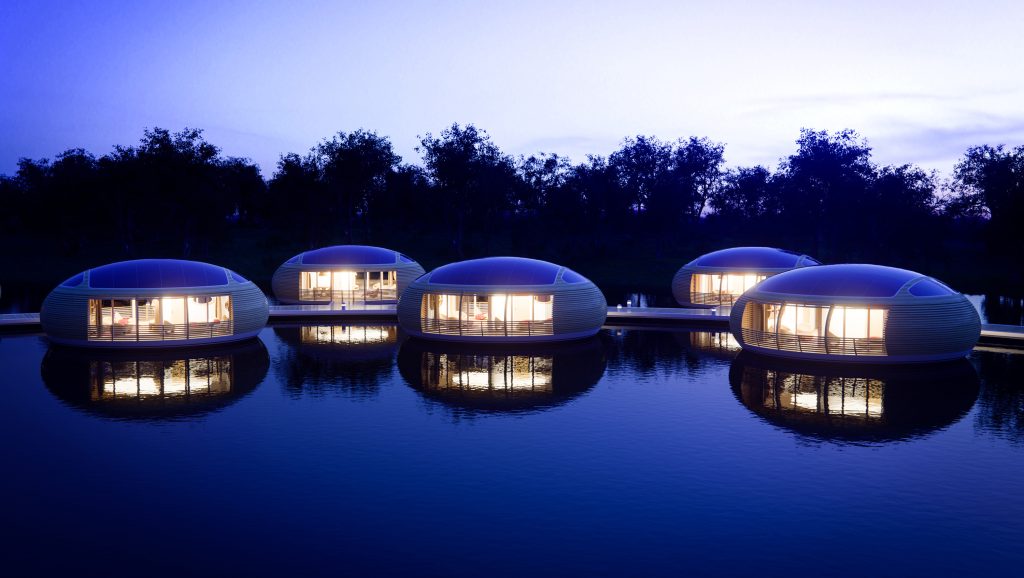
Photo: Gianrcarlo Zema Design Group
Cities as social landscapes
When the conversation turns to cities today, Zema’s focus moves toward people.
He sees cities becoming increasingly interconnected and dense. The pandemic, he says, reminded us of the value of greenery and nature, and of the need to bring them more deeply into urban life. He calls for more shared outdoor spaces, more opportunities for meeting and discussion, and places where art, music, reading, contemplation, coworking, and urban parks can merge.
Future cities should not only be smarter. They should be more socially generous.
The risk of many smart city narratives is that they reduce urban progress to efficiency. Faster mobility. Cleaner energy. Better data. More optimized services. These goals matter, but they are not enough. A city can be efficient and still feel lonely. It can be technologically advanced and still fail to create belonging.
Zema’s perspective suggests a different measure of progress. The future city must be evaluated not only by what it can calculate, but by what it allows people to experience together.
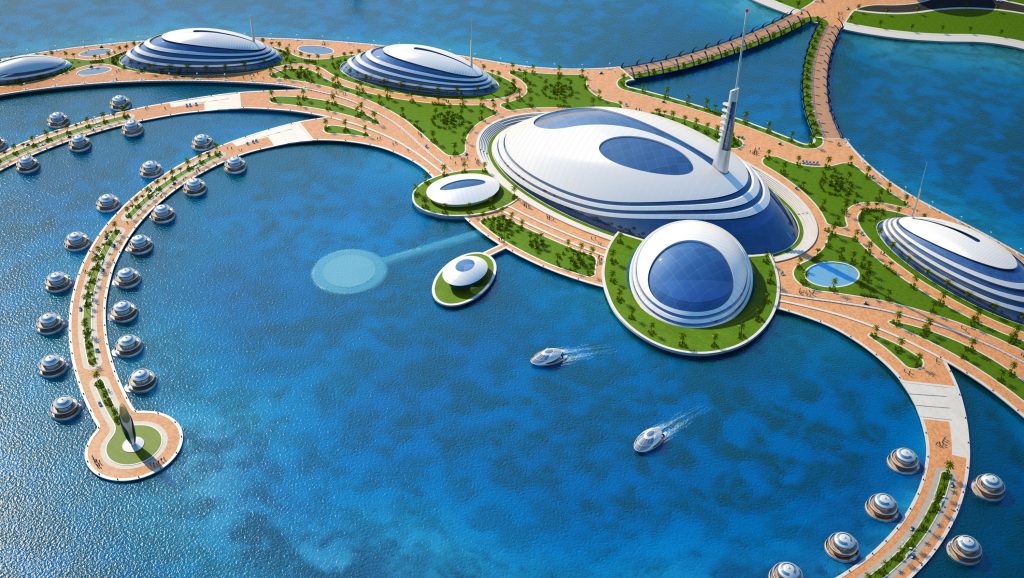
Photo: Gianrcarlo Zema Design Group
Where integration still struggles
The interview also avoids a purely celebratory tone. Zema acknowledges that integration between nature, technology, and urban life is not equally present everywhere. He points to major cities in Northern Europe, as well as places such as London, New York, and Milan, as contexts where this kind of integration is more visible. Rome, in his view, still holds great untapped potential.
But the more important observation is structural. He notes that integration is often absent in places where there are not enough flows of people to justify investment in high-level social architecture. Behind this, he identifies a deeper issue: the lack of a truly rooted social policy in urban governance.
This is a crucial urban lesson. The future city cannot be delivered only through design excellence. It also depends on policy. It depends on whether public life is valued enough to be planned, funded, and maintained. Without this, even the most advanced architectural ideas risk remaining isolated gestures.
For mayors, this is a direct challenge. If integration requires social policy (not just design ambition), then the question is whether city budgets, governance structures, and political priorities are aligned to support it. Zema’s observation points to a gap that no architectural vision alone can close.
The city as an energy ecology
Looking ahead, Zema imagines future cities as large urban parks, dotted with eco-sustainable public infrastructure functioning as major social hubs. These structures would attract different types of users and generate economic value, but above all social value.
His vision of energy is equally systemic. He imagines buildings that are both self-sufficient and interconnected. Buildings that produce more energy could support those in greater need. Energy would move according to flows, events, and changing demands.
This is a powerful shift in urban imagination. Energy is no longer just a technical service. It becomes a shared urban resource. Buildings are no longer isolated consumers. They become participants in a network.
For city leaders, this raises practical questions. How should regulations adapt to buildings that produce, exchange, and redistribute energy? How should ownership models change? Who governs these flows? How can public benefit be protected when infrastructure becomes more distributed and intelligent?
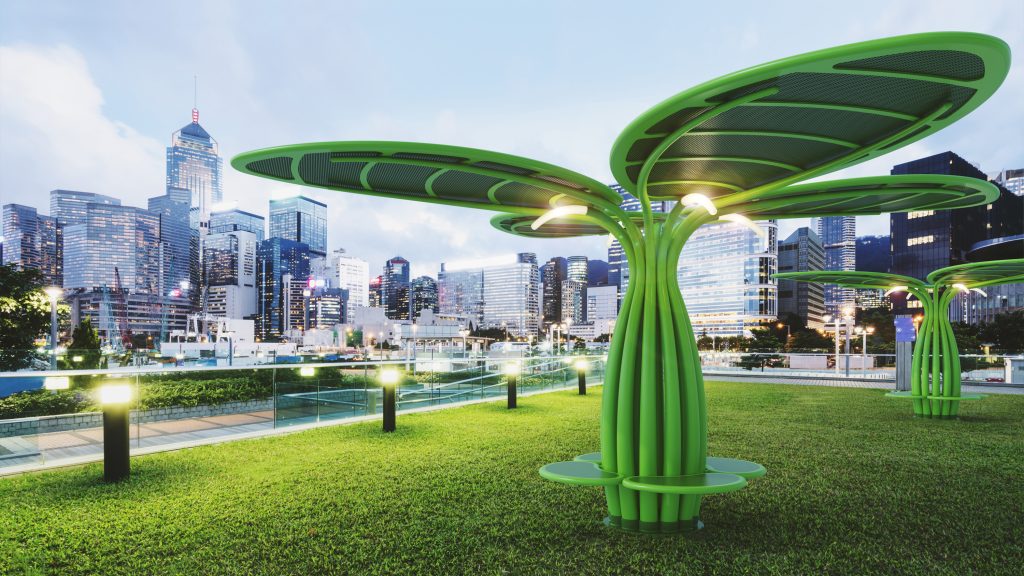
Photo: Gianrcarlo Zema Design Group
Architecture as strategic vision
Perhaps the most important statement in the interview concerns the role of architecture itself.
For Zema, architecture must provide strategic vision. Its task is to imagine and visualize better scenarios, helping guide the political and business decisions needed for transition.
This is a larger role than architecture is often given. It positions architects not only as designers of objects, but as translators between possible futures and present decisions. Architecture becomes a way of making complex transitions visible. It gives form to what cities are not yet able to fully understand.
At a time when urban systems are under pressure from climate change, resource demand, social fragmentation, and technological acceleration, this role becomes increasingly urgent.
The future of cities will not be solved by isolated buildings. It will require connected systems, circular processes, social imagination, and governance that understands public space as essential infrastructure.
Zema’s work invites us to see architecture not as a finished object, but as a living system within a larger ecology.
And perhaps that is the most important shift ahead: not designing cities as machines, but as living environments capable of producing, adapting, connecting, and caring.