
Housing at the Centre of the Global Urban Agenda – ORNA ROSENFELD: Reflections from World Urban Forum Baku on Moving from Policy Ambition to Delivery at Scale
by Svetlana Tesic and Dr Orna Rosenfeld, Global Advisor on Housing Systems, Investment & Inclusion, Architect of integrated housing delivery & investment-ready urban solutions, Trusted expert to EU, UN, IFIs, Governments & Cities
You have just returned from WUF13 in Baku, the largest World Urban Forum ever held. What were your most important takeaways?
WUF13 in Baku marked an important moment in the global urban agenda. Bringing together more than 57,000 participants from 176 countries, the Forum demonstrated a growing international recognition that housing can no longer be treated as a subsidiary part of economic, social, or spatial policies. Rather, it is increasingly understood as a foundational pillar of sustainable urban development, shaping economic productivity, climate adaptation, social cohesion, public health, and long-term territorial competitiveness and a system in its own right.
My main takeaway is that the global conversation has moved beyond diagnosing the housing crisis.
Across governments, cities, development institutions, and the private sector, there is now firm recognition of both the scale and urgency of the global housing challenge. The critical question is no longer whether we understand the problem, but whether we have the institutional capacity, governance structures, and financing mechanisms required to deliver solutions at the scale and speed that current demographic and environmental transitions demand.
The discussions in Baku also highlighted a significant shift in the geography of urban growth. Much of the world’s demographic expansion, urbanization, and infrastructure demand is now concentrated across Asia, the Middle East, Africa, and parts of Latin America. Yet many of the financial and investment frameworks that continue to shape urban development were designed for economies characterized by slower population growth, mature markets, and relatively stable development trajectories.
As a result, there is an increasing disconnect between where urban growth is occurring and how capital is allocated. Many investment models remain highly risk-averse, particularly in the housing and real estate sectors and are often ill-equipped to respond to the complexity of today’s operating environment, which is increasingly shaped by climate risks, geopolitical uncertainty, demographic shifts, supply chain disruptions, and rapidly evolving market conditions. Equally important, financial systems have been slow to adapt their risk assessment methodologies, investment horizons, and delivery mechanisms to reflect this new reality.
The challenge ahead is not simply to mobilize more capital, but to update the institutional, financial, and governance frameworks through which capital is deployed. Aligning investment systems with emerging urban realities will be one of the defining development challenges of the coming decades.
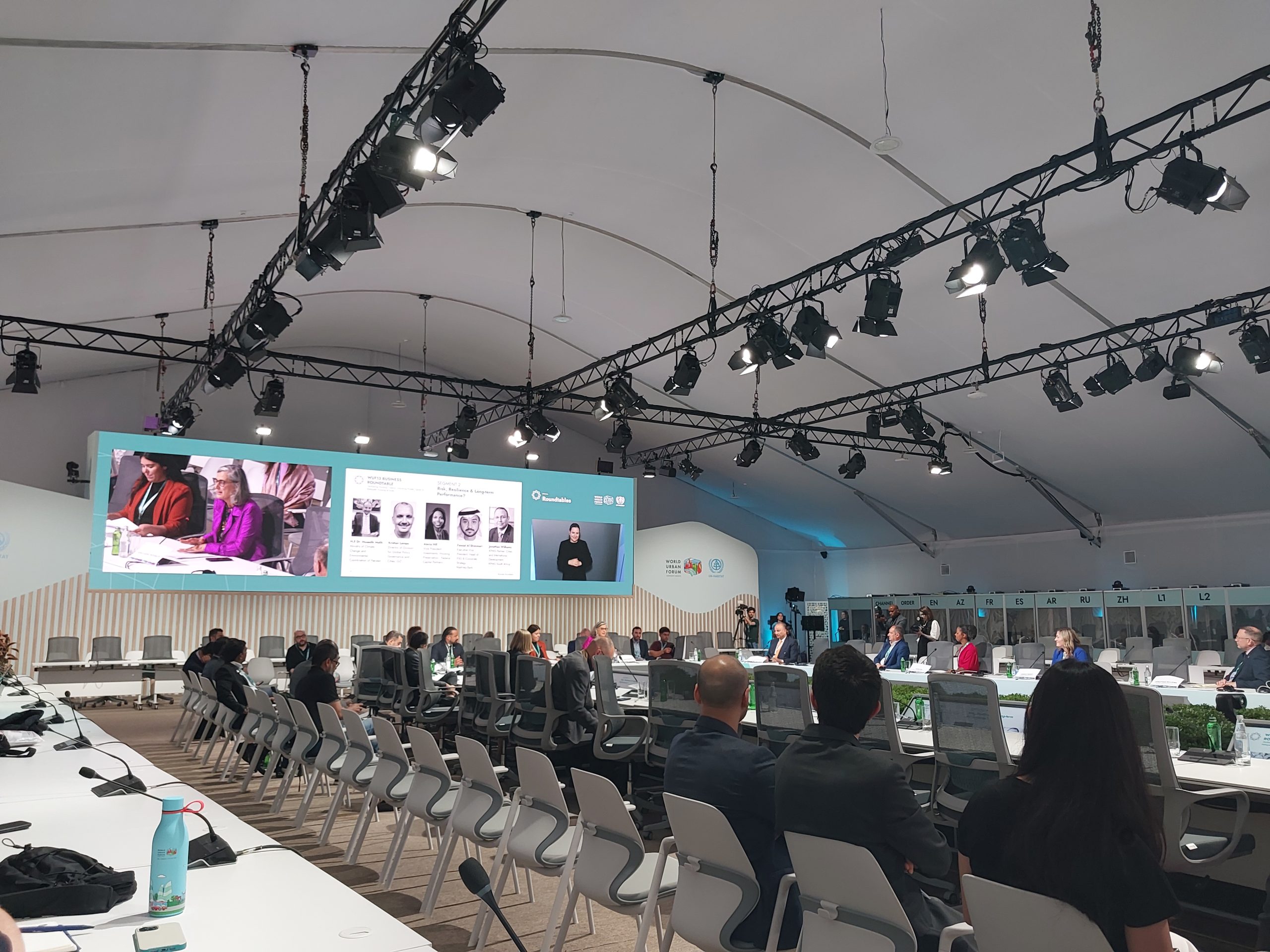
photo credit: Orna Rosenfeld
The Baku Call to Action reframes housing as a system, not just construction. How far are European cities from that understanding in practice?
The Baku Call to Action reinforces a principle that many practitioners have advocated for years: housing is a system in its own right. It cannot be viewed solely through the lens of construction, real estate, or disparate urban, economic, social or environmental policies. Housing sits at the intersection of economic development, labour mobility, social cohesion, environmental sustainability, territorial development, and urban resilience among many other issues.
Today, European cities increasingly recognise this reality. The housing affordability crisis has exposed housing as one of the most significant structural challenges facing Europe, with direct implications for economic competitiveness, workforce attraction and retention, social inclusion, and quality of life and more. There is now a much broader understanding that housing outcomes influence the performance of entire urban systems.
In many respects, Europe has already developed the intellectual and policy foundations for this approach. Programmes such as the New European Bauhaus, URBACT, Horizon Europe, and numerous Cohesion Policy initiatives promote integrated housing models that connect housing delivery with wider objectives, including social inclusion, energy efficiency, climate adaptation, governance innovation, and sustainable financing mechanisms among others.
The challenge, however, is not the absence of ideas or successful examples. Europe has produced an impressive portfolio of innovative projects, pilot programmes, and leading cities that demonstrate what integrated housing systems can achieve. The challenge lies in moving beyond isolated successes. Too often, these remain exceptional cases rather than becoming the norm. We are still speaking largely about pioneers, flagship projects, and cities with exceptional leadership or institutional capacity and those that briefly took part in the EU programs.
What Europe lacks is not innovation but systematic replication and scaling. The key question is how to translate successful models into standard practice across cities, regions, and Member States. This requires a stronger focus on what I often refer to as the governance of implementation.
Governance of implementation is ultimately what determines whether good ideas remain individual projects or evolve into large-scale housing delivery systems capable of addressing current needs. It is the bridge between policy ambition and measurable outcomes. This was one of the most important messages emerging from the discussions in Baku.
The Forum highlighted that partnership and trust are not secondary considerations; they are fundamental components of delivery. Community engagement, public-private cooperation, institutional coordination, and transparent governance should not be viewed merely as procedural requirements. They constitute the enabling infrastructure through which housing systems function effectively. These mechanisms reduce uncertainty, strengthen investor confidence, accelerate implementation, and build the social legitimacy required for long-term success.
Cities that succeed in embedding these elements into their structures of implementation governance are generally better positioned to move from experimentation to delivery at scale. Ultimately, the future challenge for Europe is not designing better housing policies, it is building the institutional capacity and implementation frameworks needed to deliver them consistently, efficiently, and at the scale required.

photo credit: Orna Rosenfeld
Housing affordability is now a political crisis in most European capitals. What can mayors do differently?
Mayors need to approach housing affordability as a long-term structural challenge rather than a temporary market fluctuation. While pilot projects and short-term interventions can provide immediate relief and valuable lessons, lasting affordability requires sustained commitment to systemic solutions that address the underlying drivers of housing supply, access, and affordability.
First, cities must strengthen what I refer to as the governance of implementation. Delivering affordable housing at scale requires effective collaboration between the public sector, private developers, financial institutions, civil society, local communities, and other key stakeholders. Housing delivery depends on coordinated action across multiple actors whose interests, incentives, and timelines do not always align. In this context, the role of city leadership is increasingly that of a facilitator, broker, and convenor, creating stable governance frameworks that align investment objectives with public policy goals and long-term urban development priorities.
Second, housing must be addressed beyond municipal boundaries. Housing markets do not stop at administrative borders, yet governance systems often do. Effective housing strategies require stronger metropolitan and regional coordination, linking housing delivery with transport infrastructure, employment centres, public services, and economic development strategies. Without this broader territorial perspective, cities risk addressing symptoms locally while the structural pressures driving housing demand continue to operate across wider urban regions.
Third, cities need stronger delivery capacity. Strategic plans and ambitious targets are important, but they are not sufficient on their own. Municipalities require the technical expertise, institutional capabilities, financial instruments, and implementation mechanisms necessary to translate policy ambitions into housing outcomes on the ground. This is where peer learning and city-to-city cooperation become particularly valuable. Across Europe and beyond, cities are generating innovative solutions to shared challenges. However, successful transfer of knowledge does not happen automatically. It requires structured methodologies, facilitation, and institutional support to ensure that good practices can be adapted, replicated, and scaled effectively across different governance and market contexts.
Ultimately, housing affordability depends on the ability to build housing systems that consistently deliver adequate supply while maintaining social inclusion, environmental performance, and economic viability. The challenge for mayors is not simply to manage housing pressures, but to create the governance and delivery conditions that allow affordable housing to become a permanent feature of urban development rather than a recurring crisis.
You work across 56 countries. Where in Europe do you see the most effective approaches to housing today, and why?
The most successful examples are not necessarily those with the largest financial resources, but those that have developed stable, long-term systems capable of delivering housing consistently across political cycles.
Vienna remains one of the strongest examples globally. Its long-standing commitment to public land management, affordable housing provision, and collaboration with limited-profit housing associations has created a resilient and inclusive housing system. Housing is treated as essential urban infrastructure rather than primarily as an investment asset, enabling the city to maintain affordability, social mix, and long-term urban stability.
Finland’s Housing First approach provides another important lesson. By treating housing as a foundation for social and economic participation rather than solely as a welfare intervention, Finland has demonstrated how integrated policy frameworks can significantly reduce homelessness while improving broader social and economic outcomes. The success of the model lies not only in the policy itself but in the sustained commitment to implementation over time.
Across parts of Central and Eastern Europe and the Baltic region, we are also seeing encouraging innovation. Several cities are experimenting with more agile approaches to land management, metropolitan governance, public-private partnerships, and housing delivery models. While their contexts differ significantly, many are demonstrating a willingness to adapt institutional frameworks to contemporary demographic, economic, and housing challenges.
What the most successful examples share is a long-term, systems-based approach to housing. Equally important, they have succeeded in building a degree of political and institutional continuity that allows housing commitment to extend beyond electoral cycles and partisan divisions. Housing is recognised as a strategic public priority rather than a short-term political issue. This continuity creates the stability required for investment, planning, and delivery at scale.
Housing investment at European scale remains fragmented. What would a coherent European housing finance architecture look like?
Europe currently operates through a complex landscape of funding instruments, including the European Investment Bank, Cohesion Policy funds, national programmes, recovery instruments, and local financing mechanisms among others. Each plays an important role, but the overall system has often lacked the strategic alignment required to address housing as a structural European challenge.
This is beginning to change. The European Affordable Housing Plan, presented in December 2025, marks a significant shift in the EU housing agenda, particularly given that housing has historically remained primarily within the competence of Member States. The Plan’s emphasis on boosting housing supply, mobilising investment, enabling reforms, and protecting the most affected groups provides a new policy framework for European action. Its proposed Pan-European Investment Platform, developed with the EIB, national and regional promotional banks, and international financial institutions, is especially important because it aims to mobilise both public and private capital for affordable and sustainable housing.
The change is also visible in the EIB’s evolving role. The EIB Group’s Action Plan for Affordable and Sustainable Housing aims to increase lending to more than €4 billion in 2025 and €6 billion from 2026 onwards, compared with an average of around €3 billion annually over the previous five years. This signals that housing is moving from a marginal investment category towards a more central pillar of European social, climate, and economic infrastructure.
However, a coherent European housing finance architecture must go beyond increasing the volume of available capital. The challenge is not only financial; it is institutional. Europe needs an architecture that connects investment with delivery capacity on the ground. In this respect, three priorities stand out.
First, Europe needs a more integrated investment framework that aligns funding streams around shared housing objectives. Housing projects should be assessed not only through financial performance or energy criteria, but also through their contribution to territorial cohesion, climate resilience, economic competitiveness, social inclusion, and long-term affordability.
Second, Europe needs stronger blended finance models. Public resources alone will not be sufficient to meet housing demand. Public capital should be used strategically to reduce risk, attract long-term institutional investment, and support affordable and sustainable housing delivery without fuelling speculation. The objective should be to crowd in investment while maintaining clear public value outcomes.
Third, Europe must invest in what I would call the governance of implementation. Across many cities and regions, the challenge is not a lack of ideas or even financing opportunities, but limited capacity to develop, structure, and deliver projects at scale. Stronger institutions, better coordination between levels of government, more effective public-private partnerships, and dedicated technical assistance are essential to transforming policy ambitions into housing outcomes.
Closely linked to this is the need for place-based adaptability. Housing challenges differ significantly across Europe. Metropolitan regions experiencing rapid population growth face different pressures from shrinking cities, post-industrial regions, or climate-vulnerable territories. Financing instruments must therefore be flexible enough to respond to local realities while supporting common European objectives.
Finally, Europe needs a stronger project-pipeline approach. Investors frequently point to a shortage of mature, investment-ready housing projects rather than a shortage of capital itself. Building robust pipelines of well-prepared projects—supported by technical expertise, standardized methodologies, and long-term planning frameworks—would significantly improve the capacity of cities to absorb investment and accelerate housing delivery.
Ultimately, the success of the emerging European housing agenda will depend not only on how much capital is mobilized, but on how effectively governance, finance, and delivery systems work together. Housing can no longer be treated as a secondary outcome of urban development. Housing is urban development, and Europe’s future competitiveness, resilience, and social cohesion will depend on its ability to deliver it at scale.