Cities across Europe and 680.000 children united against cybercrime – HackShield – teaching important lessons via a game
As digital access expands rapidly across the world, children are becoming one of the most connected and at the same time most vulnerable groups in the digital environment.
According to the World Bank, global internet access continues to grow unevenly, with over 90% of people in high-income countries online compared to just 25% in low-income countries, highlighting both opportunity and risk as more children come online.
At the same time, research supported by international institutions shows that the most common risks children face online are not only from strangers, but from peers, including bullying, harassment, and exposure to harmful content.
As children spend increasing amounts of time online, global organizations are calling for a shift toward prevention, particularly through education and early awareness as one of the most effective ways to reduce online harm and build long-term resilience.
In this context, cities are emerging as critical actors, not only in providing digital infrastructure, but in shaping how citizens starting from the youngest, navigate and understand the digital world.
It is within this space that initiatives like HackShield are gaining attention, offering cities a practical way to engage children not only as learners, but as active contributors to digital safety within their communities.
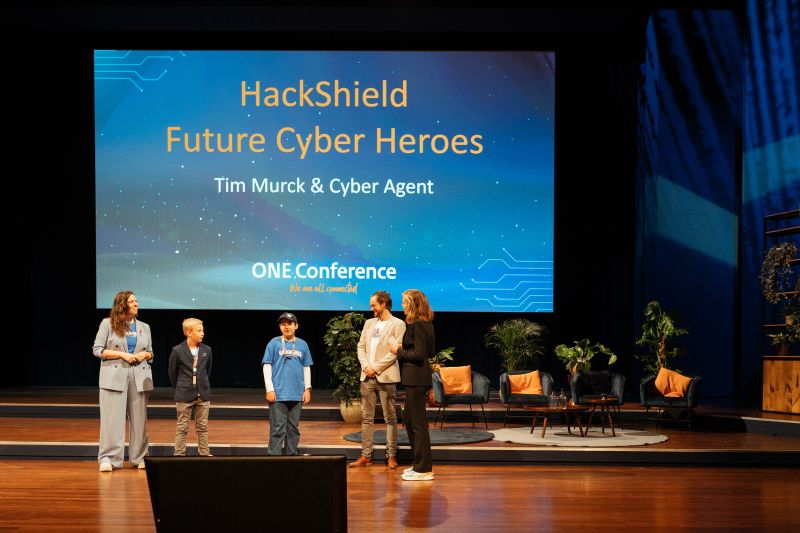
photo: HackShield
Emily, you have developed an approach that responds to the growing challenge of children’s safety in the digital world by positioning them as active contributors to digital resilience.
What insight or moment led you to shape this model, and what problem were you determined to solve at the outset?
It actually started with a very simple question: who is teaching children how to use the internet safely? And the honest answer was: no one, at least not in a structural way.
At the same time, I come from the gaming industry. I’ve seen how powerful games can be to teach and engage. Together with my co-founders, we explored: can we turn something complex like online safety into something children actually enjoy?
We tested this with a pilot of 10,000 children. The results were very clear: children not only liked it, they learned from it and applied it.
That was the turning point. We realized the problem is not that children don’t want to learn it’s that we are not offering it in the right way. So instead of treating children as passive users, we position them as active contributors. As Cyber Agents.
Today, more than 680,000 children have played HackShield across 8 countries. And what we see is that when you give children the right tools, they don’t just protect themselves they help others too. For us, digital education is no longer a choice. It’s a necessity.

Photo: HackShield
You collaborate closely with municipalities, can you walk us through what that collaboration looks like in practice? Where does the city step in, and what makes a city successful in activating HackShield?
In practice, municipalities play a key role in making HackShield work locally.
We usually start together: how do we reach as many children as possible in the city? Schools are an important part of that, but also libraries, community centers and local campaigns.
The city helps activate the network. They bring schools, partners and sometimes even local role models together.
What makes a city successful is ownership. When a municipality sees this not as a project, but as part of their responsibility for children’s safety, it really works.
The most successful cities are the ones that connect it to a bigger goal. For example: becoming a city where children are digitally resilient or where cyberbullying is reduced.
Then HackShield becomes a tool to achieve that, not just an initiative on the side.
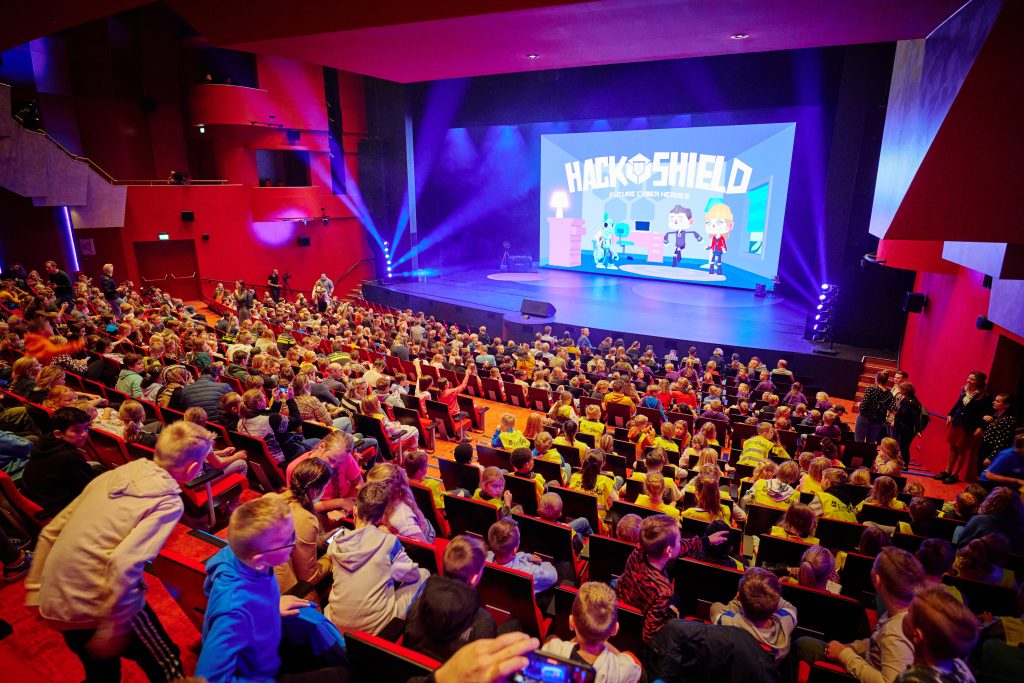
HackShield Giga Event, AFAS Theater Leusden, 14-10-2022
Initiatives like HackShield sit between education policy and local implementation.
From your experience, what enables municipalities to take an active role here, and how do you align with national education frameworks as you scale?
HackShield sits exactly in between policy and practice. And that’s also where the challenge is.
What helps municipalities take action is when the barrier is low. HackShield is easy to implement, it works with existing infrastructure like digital classrooms, and it is free for children.
At the same time, we align with national education goals, like digital literacy and citizenship. So it doesn’t add extra pressure on schools it supports what is already expected.
What we often see is that the tools are already there. Schools are open to it, teachers are positive, and children are engaged.
The challenge is not proof it’s decision-making and scaling what already works.
That’s where municipalities can really lead.
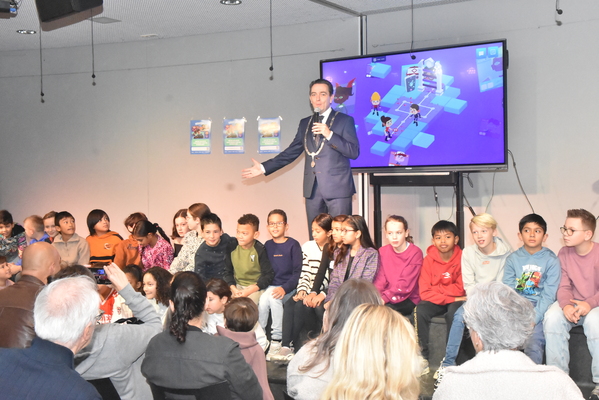
Photo: HackShield
HackShield doesn’t just educate children, it influences households and communities.
What signals or evidence have you seen that this approach actually changes behavior beyond the individual user?
One of the strongest signals we see is that children take what they learn into their homes.
For example, children start talking to their parents or grandparents about passwords, scams or online behavior. That creates conversations that normally wouldn’t happen.
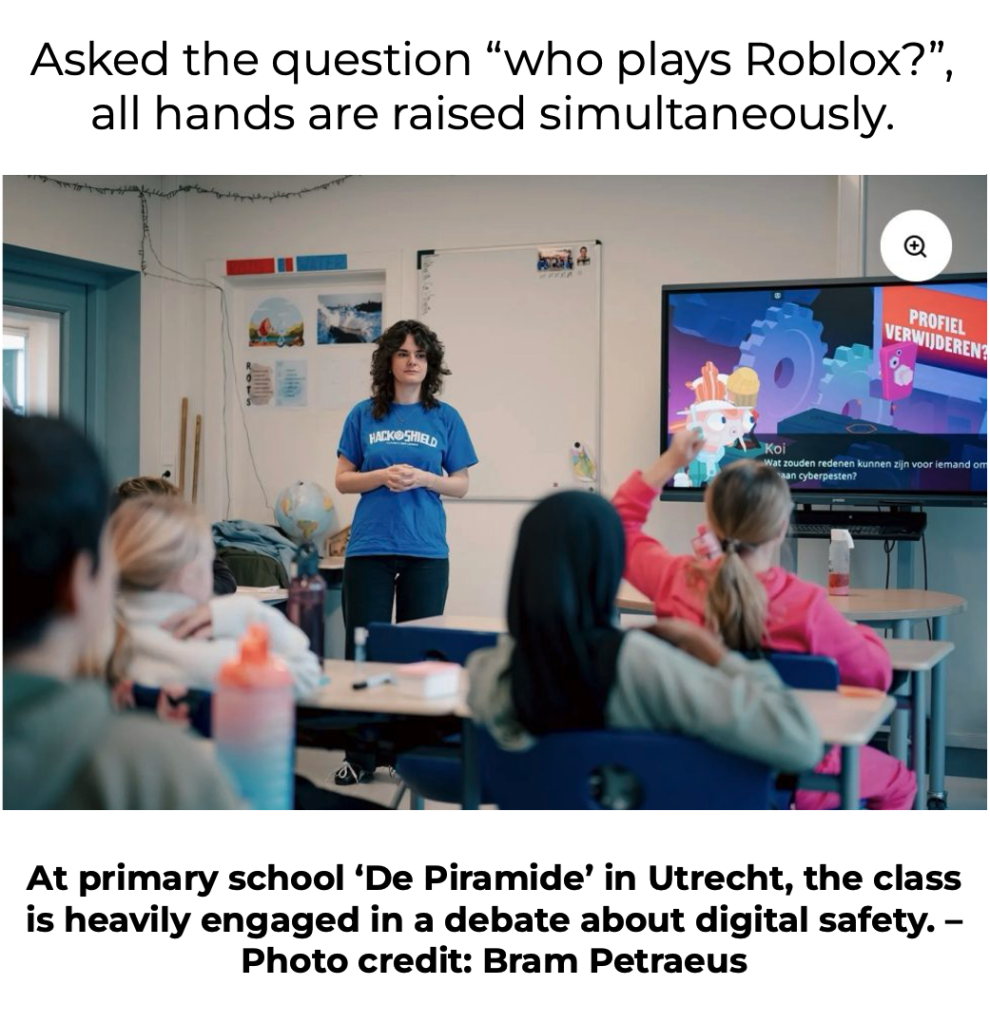
We also see it in the data. In one module about safe gaming, played by 160,000 children, one in three said they regularly talk to strangers online. That gives us direct insight into what is really happening and where we need to act.
But beyond the data, the stories are just as important. We’ve seen children take initiative in their class, speak up about cyberbullying, or even grow into roles like youth mayor.
That’s when you know it goes beyond education. It becomes behavior change in families and communities.
As cyber threats become a growing urban challenge, do you see initiatives like HackShield becoming part of formal city strategies, for example within digital resilience or public safety policies?
Yes, I do believe initiatives like HackShield will become part of formal city strategies.
Cities are already dealing with digital threats from online fraud to cyberbullying. And those challenges start at a young age.
If you want to build a digitally resilient city, you have to start with the next generation.
What we see now is that digital resilience is often still treated as a project. But it should become part of long-term policy, just like physical safety.
HackShield can play a role in that, because it is scalable, proven and directly connected to real behavior.
The shift we need to make is from temporary initiatives to structural solutions.
You’ve expanded beyond the Netherlands. What needs to be adapted when bringing HackShield into different countries or city contexts?
When we expand to new countries, the core stays the same: children are motivated by play, storytelling and real-world impact.
But the context always changes.
You need to adapt to the local language, culture and educational system. But also to local challenges. For example, the type of online risks or how schools are organized.
Partnerships are also key. You need local partners who understand the system and can help activate it.
What we’ve learned is that the model works across countries we are now active in 8 countries but success always depends on local ownership and collaboration.
In the end, the mission is universal: helping children grow up safe and confident in a digital world. But how you get there is always local.