- en
Sweden: Creating the transition to a circular economy together
Green TransitionNewsTop stories
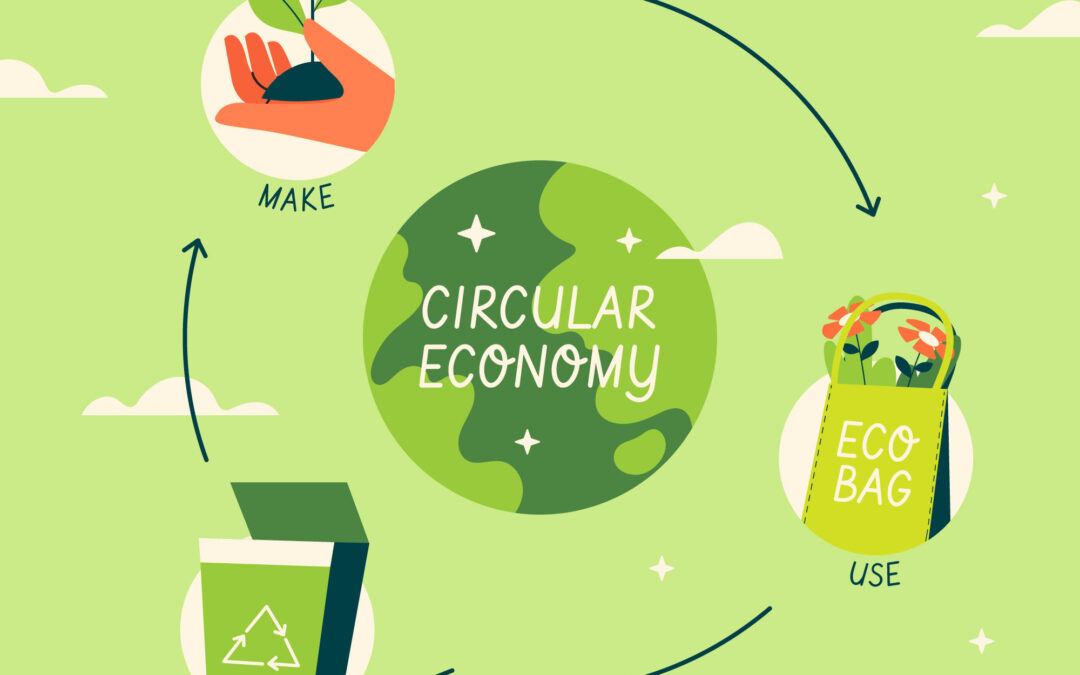
Overconsumption occurs when resource use exceeds the ecosystem’s sustainable capacity. Excessive consumption or use of goods that the world has been witnessing for a while is worsening the already critical environmental pressures. Urgent steps and new game-changing solutions are needed to tackle this issue. One of the models that completely redefines the current state of production and consumption is the circular economy.
This fresh concept focuses on redesigning products to make them more durable, reusable, repairable and recyclable, allowing them to be used much longer. Simultaneously, it aims to make people reconsider how they consume goods in general. All in all, the circular economy represents a significant shift in how the world produces and consumes goods and services and has recently been gaining ground.
The European Commission adopted a new circular economy action plan, a key component of the European Green Deal, in March 2020. The action plan focuses on product design, promotes circular economy processes and encourages sustainable consumption, among other things. The transition to a circular economy is expected to reduce the strain on natural resources while also fostering long-term growth and job employment. Furthermore, it is also required to meet the EU’s 2050 climate neutrality target and to halt biodiversity loss.
At the same, numerous EU member states have been working on their own circular economy strategies which were meant to help them actively promote the concept and set tangible goals for the future. Several months after the European Commission’s action plan was adopted, the Government of Sweden adopted a national strategy for a circular economy that lays out the goals and objectives for a long-term and sustainable transition in Swedish society.
Swedish cities are traditionally known as some of Europe’s greenest and most sustainable ones. Many of them have been continuously topping the global sustainability indexes and are regularly praised for their exceptional environmental efforts and green practices. The strategy document stated it is the role of the government to create the conditions for the good work that is already being done in regions and municipalities, the business sector, universities, other higher education institutions, and civil society.
‘’The transition to a circular economy has great potential to reduce resource use, thereby limiting climate and environmental impacts. Enterprise and innovation, based on circular material flows and business models, can strengthen the development of a resource-efficient, non-toxic, circular and bio-based economy throughout the country’’, it was stated in the Swedish government’s strategy for transition to the circular economy.
The strategy included a vision and outlined the path towards a circular economy in Scandinavia’s largest country. Four critical focus areas for achieving this vision were also identified. They included: circular economy through sustainable production and product design; circular economy through sustainable ways of consuming and using materials, products and services; circular economy through non-toxic and circular material cycles and circular economy as a driving force for the business sector and other actors through measures to promote innovation and circular business models. All of the four priority areas were closely linked.
The first focus area explores how to achieve a circular economy through sustainable production and product design. Product design is critical to the transition to a circular economy because it severely impacts the lifespan of the product. Encouraging the development of more resource- and energy-efficient manufacturing processes was therefore essential.
The second focus area is on sustainable methods of consuming and using materials, products, and services. Reusing products, renting, sharing or leasing them instead of purchasing new ones, can contribute to more sustainable consumption. One key to success is the development of new, innovative solutions that make this possible, it was stated in the document.
The focus area of non-toxic and circular material cycles is aimed, among other things, at “promoting reuse of products ahead of recycling and other waste management“. Finally, the fourth focus area addresses how the circular economy can be a driving force for the business sector and other actors through measures to promote innovation and circular business models.
Citizens and companies alike can successfully implement the concept of the circular economy by taking different steps such as reusing goods and recycling materials. Joined efforts of all key actors remain key for the transition to be successful. The Swedish strategy offers a clear vision and concrete steps for this concept to be broadly implemented in the future, and can hopefully inspire other nations and their cities to take similar steps. (photo credit: Freepik)