From Pilots to Deployment: A European Roadmap for Automated Mobility in Cities – Guido Di Pasquale, PAVE Europe
As automated mobility moves steadily from controlled pilots toward early real-world deployment, European cities are entering a new phase of decision-making. The newly released Partners for Automated Vehicle Education Europe (PAVE Europe) report underlines this shift, presenting “seven action points for Europe” as a shared roadmap for moving from pilots to deployment while strengthening public confidence and ensuring accessibility and human experience remain foundational.
Across Europe, autonomous systems are already being tested and introduced in public transport, logistics, and municipal services signaling that this is no longer only a question of individual adoption, but of how cities design and operate their mobility systems. The European Commission increasingly frames automated mobility in this context: as a tool for safer, more efficient, and more inclusive transport networks.
This shifts the conversation.
From whether the technology works, to how it is integrated into public services, how responsibility is defined, and how cities ensure it delivers value in practice.
In this context, Mayors of Europe is collaborating with PAVE Europe as part of a broader ecosystem of stakeholders shaping the future of automated mobility in Europe. PAVE brings together public and private actors to advance understanding of automated vehicle technologies and their societal impact, supporting a future that is safe, sustainable, inclusive, and efficient, while strengthening public awareness and informed dialogue.
Through this exchange, we explore with Guido di Pasquale, Managing Director at PAVE Europe, how European ecosystem is evolving and what cities will need to move from experimentation to responsible, human-centric deployment at scale.

Guido di Pasquale, Managing Director at PAVE Europe
Your latest report signals a shift from pilots toward real-world deployment. What has fundamentally changed in Europe’s readiness for automated mobility over the past two years?
Over the last few years, Europe has moved from exploring automated mobility through controlled demonstrations toward preparing for real operational services. Technology maturity has advanced significantly and so has the growing ecosystem around it. Cities, public transport operators and authorities, logistics operators and authorities, industry and regulators are now actively working together to understand how automated services can function in everyday mobility systems.
Many European cities are beginning to view automated mobility not just as an isolated technology experiment but a tool to address real urban challenges from driver shortages and service gaps to improving accessibility and efficiency in passenger and goods transport. The report from the PAVE Europe Conference last November reflects this shift. It presents seven action points for Europe that focus on scaling responsibly, strengthening public confidence and ensuring that deployment remains inclusive as automated services move closer to real-world operations.
PAVE Europe has consistently emphasized public trust and acceptance. In your view, is Europe now moving beyond awareness into true operational readiness?
We are moving in the right direction. Awareness of autonomous vehicles is growing and European cities are now actively engaging with realising the potential of the technology. Countries such as France, the United Kingdom, Norway and Germany have hosted sophisticated pilot environments that are integrated with public transport networks or mobility services. These initiatives help policymakers, operators and the general public understand how automated vehicles can operate safety and effectively in complex urban environments.
Operational readiness is not only about the technical, though, it’s also about public confidence, transparency, and experience. People need to see these systems operating safely and delivering clear benefits. This is why initiatives that combine testing with public engagement and education are critical to building lasting trust.
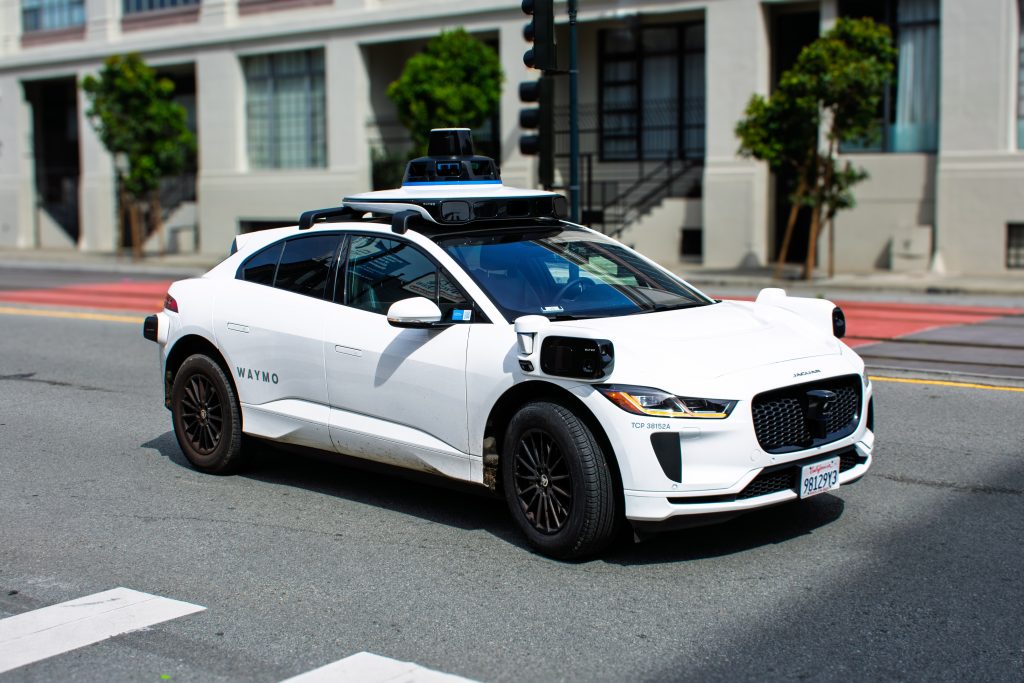
Photo credit: Waymo
From your perspective, where do European cities currently stand in this transition? Are they prepared to host and scale autonomous mobility solutions?
Several European cities are increasingly prepared to host automated mobility services and have created supportive environments for testing and early deployment. Cities bring together public transport authorities, operators and research institutions, creating strong ecosystems for innovation.
Moving from pilots to scaled deployment does still present some challenges. Regulatory frameworks remain fragmented across countries, which can slow cross-border deployment and investment. Infrastructure and operational integration with existing mobility systems also need further deployment.
In short, cities are ready to experiment and are increasingly ready to deploy, but scaling will depend on clear regulatory pathways, interoperable standards and long-term collaboration between public authorities and industry.
A positive signal for deployment and regulatory harmonisation in Europe is the European Commission’s cross‑border testbeds initiative. As part of the Industrial Action Plan for the European automotive sector, the Commission is committed to supporting the establishment of large‑scale European cross‑border testbeds for autonomous vehicles (AVs) by 2026. These testbeds aim to facilitate the (pre)commercial deployment of AVs for both passenger and goods transport across the EU.
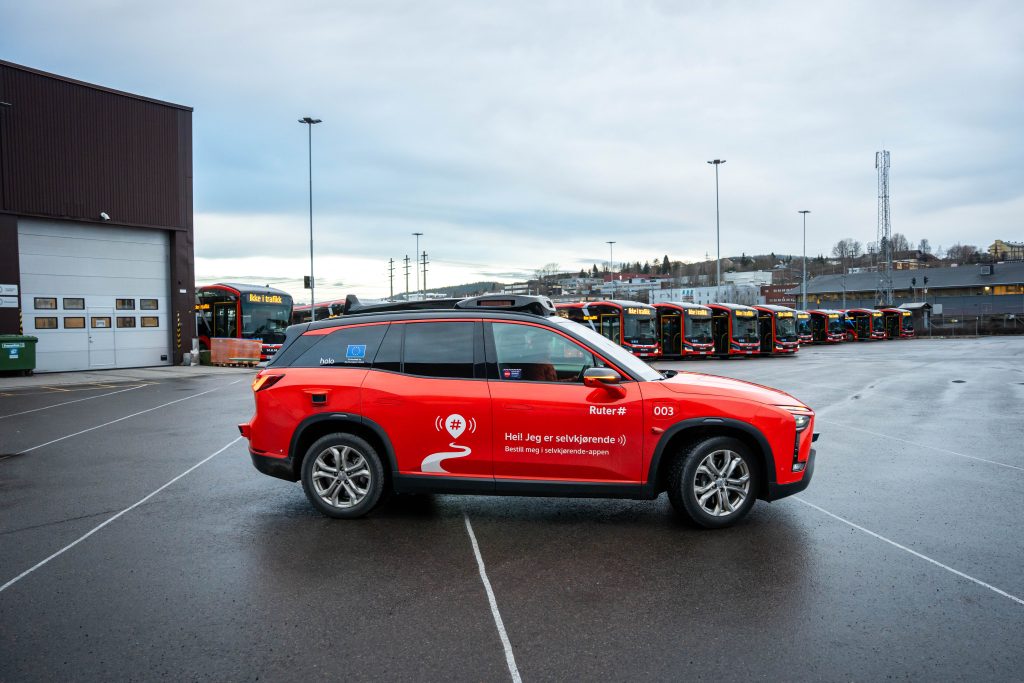
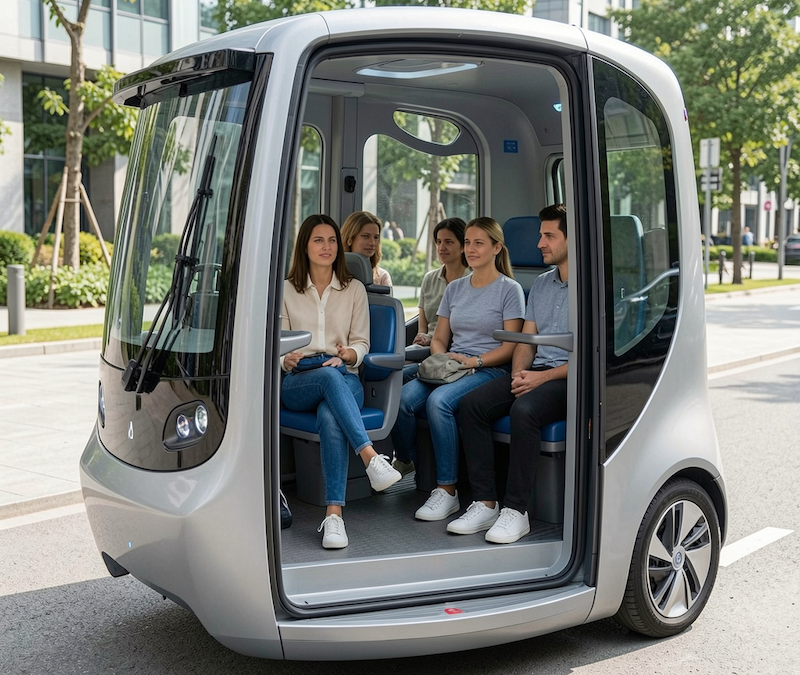
Credit: Surf Media. Ruter As. Holo
What are the most underestimated challenges cities face when moving from pilot projects to sustained deployment?
One underestimated challenge is institutional readiness. Pilots are temporary projects supported by research funding or innovation programmes but long-term deployment needs stable governance structures, operational planning and procurement models. Another challenge is integrating automated services into existing mobility systems. The vision for Europe is not for automated vehicles to operate in isolation but for them to complement public transport networks, shared mobility and urban planning strategies.
Scaling also requires addressing issues that are less visible during pilots like insurance, liability frameworks, operational oversight, and data governance. These are necessary to ensure that automated mobility can operate safely and sustainably at scale.
Across Europe we see different levels of experimentation. Which cities or pilot environments do you consider the most instructive today, and what should other urban leaders realistically learn from them?
Several European cities provide valuable lessons for others exploring autonomous vehicle technology. For example, Hamburg has built a strong ecosystem by bringing together mobility operators, technology developers and city authorities. Companies such as MOIA and Hamburg are actively working within that ecosystem, while partnerships and acquisitions in the mobility sector show how industry collaboration is evolving around mobility.
Another instructive example comes from Oslo, where the public transport authority Ruter has taken a proactive approach in testing automated mobility as part of their public transport strategy. We recently hosted a study visit to Oslo in December in collaboration with Mobileye, Holo and Ruter. Across two days, participants were able to engage in open discussions, technical exchanges, and hands-on experiences with autonomous vehicles. These two days were an opportunity to show how autonomous vehicle services can move from pilot phases toward scalable, trusted operations within European public transport systems.
The key lesson for other cities is that successful pilots are not just focused on technology. They work best when cities act as conveners – bringing together operators, regulators and communities to learn together.
Looking ahead, what kinds of city-industry collaboration models will be essential to move autonomous mobility from promise to everyday urban reality in Europe?
Collaboration is absolutely essential. Realising the potential of autonomous vehicles needs coordination across many actors: cities, transport operators, technology developers, regulators, insurers and research institutions.
Successful models will likely include public-private partnerships, shared testbeds and regulatory sandboxes. Education and public engagement are equally important to ensure that citizens understand how these technologies work and how they can benefit.
No single actor can deliver automated mobility alone. The transition will require a collective effort across Europe’s mobility ecosystems with cities playing a central role in ensuring that deployment remains aligned with public needs, accessibility for all and sustainability goals.