Beyond the Digital Replica: Stefania Paolazzi: How Bologna is Building a Civic Digital Twin
by Stefania Paolazzi, Innovation Manager at Comune di Bologna
For decades, Bologna has been one of Europe’s most compelling laboratories of civic innovation and collaborative governance. Long before “co‑creation” and “civic tech” became common policy language, the city had already established structures that bring residents, students, newcomers, associations, and communities into the everyday practice of governing. As documented in With the People, a film produced by Mayors of Europe in collaboration with The Better Politics Foundation, participation in Bologna is not an initiative or a pilot. It is a system: A way of thinking, designing, and deciding.
This culture has also influenced the way Bologna approaches digital innovation. The Civic Digital Twin was not conceived simply as a technological platform for monitoring and simulating urban systems, but as a public infrastructure capable of connecting data, scientific knowledge, policy design, and collective intelligence.
Understanding this origin is key to understanding what makes Bologna’s Digital Twin distinctive.
The ambition was never merely to create a digital replica of the city, but to develop a new capacity to understand complexity, explore future scenarios, and support more informed, transparent, and inclusive decision-making.

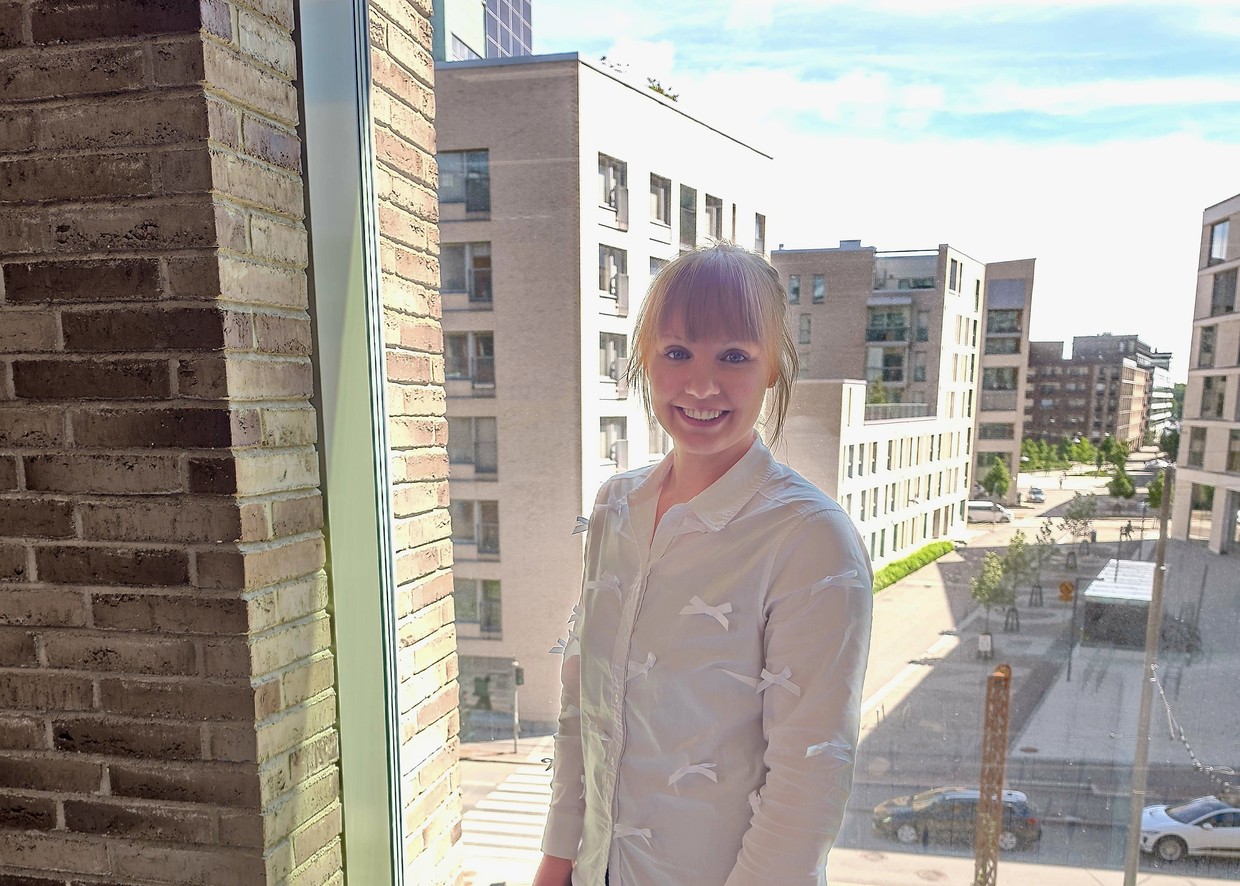
photo credit: Stefania Paolazzi
How the idea emerged: from data-rich city to participatory intelligence
The first seeds of Bologna’s Digital Twin were planted when the municipality recognized a clear challenge shared across many European cities: governance was becoming more complex, data more abundant, and urban transformations more interconnected. Climate risks, mobility transitions, demographic shifts, pressure on historical heritage, and social fragilities increasingly required anticipatory, evidence-based, cross-sector decision-making.
The initiative was formally launched by the Municipality of Bologna, in partnership with leading national and international research institutions, with a dual ambition:
- to build a next-generation technological infrastructure supporting analysis of urban phenomena, monitoring policy evolution, simulating future scenarios and impacts;
- and to embed this infrastructure inside Bologna’s long-standing culture of collaborative, citizen-centered governance.
In other words, the goal was not merely to mirror the city’s infrastructures, but to equip it with a shared cognitive environment where policymakers, researchers, stakeholders, and citizens could interpret complexity together.
Reframing Urban digital twins beyond technical optimization
Digital twins were originally developed in industrial settings, where the objective was to optimise production processes and monitor machinery with high precision. When this logic is transferred to cities, however, it quickly reveals its limits.
Urban environments are not factories. They are living ecosystems shaped by everyday behaviors, social dynamics, vulnerabilities, and collective choices.
Three main insights drove the shift towards what the city and its partners calls a “Civic digital twin”:
- Urban transformations are socio-technical: a mobility plan or climate strategy works only if aligned with how people actually live, move, and behave.
- Citizens are not passive recipients of urban change. They are co-authors of the city’s evolution.
- Digital tools and models must be interpretable, understandable and discussable also by non-experts.
This reframing has been possible thank you to a strategic research and innovation partnership with national and international affirmed partners such as Fondazione Bruno Kessler and University of Bologna, and led Bologna to design not only a geometric and physical urban digital twin, but a digital environment that captures attitudes toward change, models collective behaviors, and enables participatory scenario exploration.
What the Digital Twin enables today
The Bologna Digital Twin is now a functioning ecosystem composed of a cloud-native, open-source Data and AI Platform; a geometric and physical 3D city model; analytical tools and algorithms; new data governance instruments; and a Civic Digital Twin layer enabling the use of civic data and policy analyses, citizen engagement and scenario co-design.
In practice, it already supports several strategic policy domains:
Sustainable Mobility
One of the most advanced applications focuses on modeling mobility dynamics, integrating data from the road network, origin–destination flows, traffic sensors, mobility plans, commuting behavior, and indicators of social fragility.
The system enables the city to simulate the impact of mobility measures, not only on traffic, but also on equity. Using fragility indexes and effort functions, Bologna can assess how different groups (e.g., by age, gender, income, ability) experience mobility policies, identifying risks of indirect discrimination before they materialize. This marks a major shift toward fairness in urban modeling.
Heatwaves and climate adaptation
Heatwaves are among Bologna’s most urgent challenges. The Digital Twin allows the city to analyze heat distribution, model environmental indicators, and test mitigation strategies, from nature-based solutions to individual or societal behavioral shifts. This empowers the administration to prioritize actions based on both climatic effectiveness and social vulnerability.
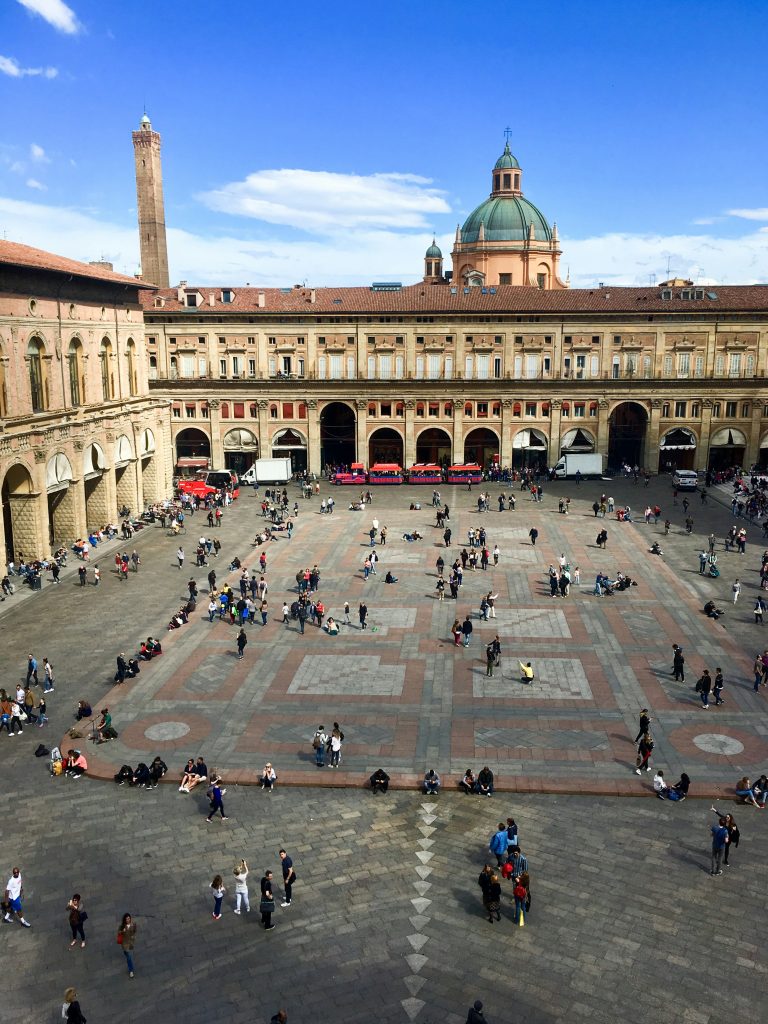
Photo by Maria Bobrova on Unsplash
The Historic City Centre
Bologna’s Digital Twin supports the ambitious municipal strategy dedicated to the renovation of the Historic City Centre focused on preserving heritage, enhancing public spaces, strengthening proximity-based services, and improving livability. Here, the Civic Digital Twin becomes particularly relevant in order to consider different policy dimensions simultaneously and also support the participatory processes connected to the strategy.
Across all these domains, a common ambition is evident: to move from reactive policymaking to anticipatory governance, where decisions are tested, compared, and discussed before implementation.
Not only technology: the importance of methods in digital transformation
Developing a civic digital twin required more than selecting tools from the market. Standard solutions do not capture behavioral dynamics, social fragilities, or the participatory processes that shape Bologna’s governance model. For this reason, the municipality chose a research‑driven partnership to build an initial prototype of a Civic Digital Twin. This prototype is being developed and tested within the current consortium and will move into full production after 2027, once validated in real policy contexts.
A first methodological pillar is the system of strategic partnerships sustaining the Civic Digital Twin development. Bologna created a research and development consortium involving Fondazione Bruno Kessler, The University of Bologna, CINECA and The Rusconi Ghigi Foundation, and complemented it with national collaborations with institutions such as the ICSC national research centre and scope collaboration with partners such as ARUP and the University of Virginia. These actors were explicitly asked to work on open‑source solutions, ensuring that the Digital Twin can evolve alongside the administration’s needs and avoiding technological lock‑in, especially in these early phases when requirements are still emerging. This approach keeps development transparent, adaptable, and aligned with public‑sector values.
The second element is the incremental approach. Instead of attempting to design a fully comprehensive system from the outset, the city chose to proceed step by step: addressing well‑defined, codified problems while leaving space to investigate open questions. This reduces risk, allows for learning, and ensures that each component responds to a concrete policy need before expanding further.
The third pillar is co-design. The Civic Digital Twin is being developed through a structured engagement process involving municipal departments, external stakeholders, and citizens. Initial engagement activities focused on municipal departments and external stakeholders, helping identify operational requirements and concrete application domains aligned with real policy needs across municipal departments.
Starting from 2026, citizen engagement becomes a central component of the project and operates at multiple levels.
First, citizens contribute to the creation of civic data through questionnaires, behavioral surveys, ethnographic activities, and citizen science initiatives. These activities help the Municipality understand perceptions, behaviors, and attitudes towards urban transformations that are not captured by traditional administrative and statistical datasets.
Second, citizens are involved in the co-design of the Civic Digital Twin itself as a civic infrastructure. Through workshops and collaborative processes, participants contribute to defining priorities, functionalities, accessibility and other technical requirements. Third, the Civic Digital Twin is conceived as a participation tool in its own right. Accessible visualisations, simulations, and scenario exploration processes will support public consultations and collective reflection on urban transformations and policy alternatives.
Finally, future engagement activities will support the co-design of new domain-specific applications of the Civic Digital Twin, enabling citizens and stakeholders to contribute to the identification of emerging challenges and priorities for future development.
Together, these methods have been as important as the technology itself in shaping Bologna’s Civic Digital Twin and will continue to guide its evolution toward full production in the coming years.

Photo by Hugo Kruip on Unsplash
Challenges and how Bologna navigated them
As the Digital Twin took shape, Bologna encountered many of the same obstacles probably familiar to other European cities attempting similar projects.
Besides the significant work carried out in recent years by the Municipality of Bologna to strengthen the use of data in public decision-making, through initiatives such as the Open Data Portal, the Bologna Gender Atlas for a Feminist City, and Vulnerability Maps, data fragmentation and the lack of integrated data governance across municipal departments remain persistent challenges. These issues become even more critical with the adoption of advanced technologies such as Digital Twins and AI. To address these challenges, the city established a unified Data Space within the Civic Digital Twin architecture and initiated a broader redesign of its data governance framework including processes, roles, and rules.
A second challenge concerned fairness in urban modeling and artificial intelligence. Bologna had already invested significantly in the production of disaggregated datasets and indicators capable of representing different population groups and urban vulnerabilities. However, it soon became clear that fair data alone was not sufficient. As predictive models, simulations, and AI systems become part of decision-making processes, there is also a need for algorithms capable of recognizing and preserving these differences rather than masking them through aggregated outputs. For this reason, the Civic Digital Twin incorporates fragility indicators, fairness metrics, and transparent modeling approaches designed to assess how policies may affect different social groups. The objective is not only to optimize urban systems, but also to identify potential unequal impacts and support more equitable policy decisions.
A third challenge concerned technological sovereignty. Digital Twins and AI systems often rely on proprietary technologies that can create dependency on individual vendors, limit transparency, and make it difficult for public administrations to fully understand or control how critical systems operate. To mitigate these risks, Bologna adopted an open-source and modular approach from the outset. Research and development activities were entrusted to a consortium of public and research institutions, while technological solutions were designed to remain interoperable, adaptable, and reusable over time. This approach helps reduce the risk of vendor lock-in and supports greater transparency, allowing the Municipality to retain strategic control over the evolution of the platform and its underlying models.
A final challenge concerns the rapidly evolving regulatory framework surrounding artificial intelligence. While European regulation is creating important safeguards, public administrations are still learning how to translate legal requirements into operational practices and technical systems. For this reason, Bologna is using the Civic Digital Twin as a testing environment for responsible AI governance. Through a dedicated AI regulatory sandbox developed with research partners, the city is experimenting with methods, procedures, and tools to assess compliance with emerging European requirements, including transparency, accountability, human oversight, robustness, and fairness. Rather than treating regulation as a constraint, Bologna sees it as an opportunity to build more trustworthy and reliable digital public infrastructures.
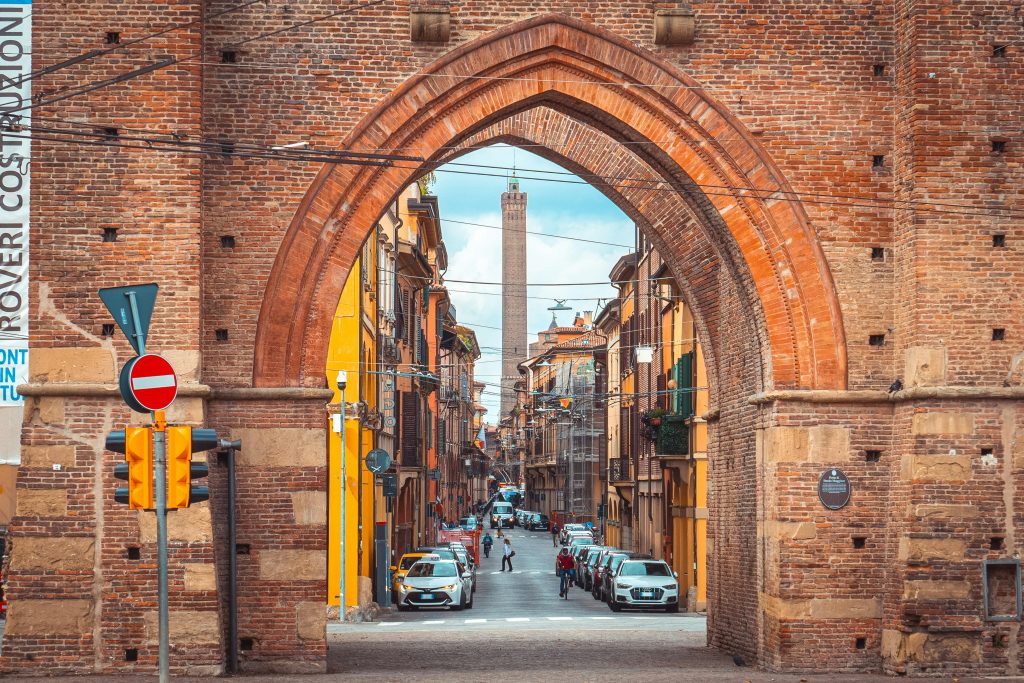
Photo by Petr Slováček on Unsplash
What comes next: the future ambition
The next phase of Bologna’s Digital Twin focuses on turning the current prototype into a mature, fully operational civic tool. One priority is to broaden the thematic scope of the Civic Digital Twin, building on the initial work on mobility, heatwaves and the historic centre to include additional domains where social behaviour, environmental conditions and public policy intersect. In parallel, the city is working on a more advanced 3D interface that brings together geometric, physical and civic layers in a way that is intuitive for both technical users and non‑experts.
Another direction concerns the municipality’s broader strategy for adopting artificial intelligence. The Digital Twin will play an increasingly central role in this framework, serving as a testing ground for applying ethical principles, transparency requirements and reliability standards through concrete tools.
A final ambition is to move beyond experimentation and increase the level of embedment of the Digital Twin into participatory and decision‑making processes. The goal is for simulations, visualizations and scenario analyses to become a normal component of public consultations and policy design, not an experimental practice.
As the system matures, the Digital Twin is expected to become a stable reference point for the city, supporting internal planning, enabling more informed public dialogue and improving the quality and transparency of municipal decisions.
Conclusions
Bologna’s Civic Digital Twin is still a work in progress. Many components are currently being tested, refined, and integrated into real policy contexts, while new capabilities and use cases continue to emerge.
Yet, several lessons have already become clear. Building a Civic Digital Twin is not simply a matter of developing new technological tools. It requires strong data governance, attention to fairness and transparency, collaboration between public institutions and research organisations, mechanisms that progressively involve stakeholders and citizens in both the creation and use of the system, and an architecture designed to remain open, adaptable, and sustainable over time.
Bologna’s experience also suggests that the value of a Digital Twin lies not only in its ability to represent the physical dimension of a city, but in its ability to connect and integrate different forms of knowledge. Administrative data, scientific models, professional expertise, and citizens’ perspectives all contribute to a richer understanding of urban challenges and their potential solutions.
As the project evolves, the ambition remains the same: to transform data, models, and artificial intelligence into practical tools that help cities better understand complexity, explore future scenarios, and support more informed, transparent, and inclusive decision-making.