“Japan Has an Answer. Europe Hasn’t Asked the Question Yet. ” Evolution of Urban Development in Japan – Takehiko Nagumo, Smart City Institute Japan
The future many European cities are preparing for is already unfolding in Japan, as a lived reality shaped by aging populations, demographic decline, and the need to fundamentally rethink how cities function.
In Japan, these dynamics have already influenced how cities design services, integrate digital infrastructure, and approach long-term policy planning. Across Europe, similar pressures are now becoming increasingly visible, raising a common questions about how to translate innovation into tangible public value, and how to align technological advancement with the realities of everyday urban life.
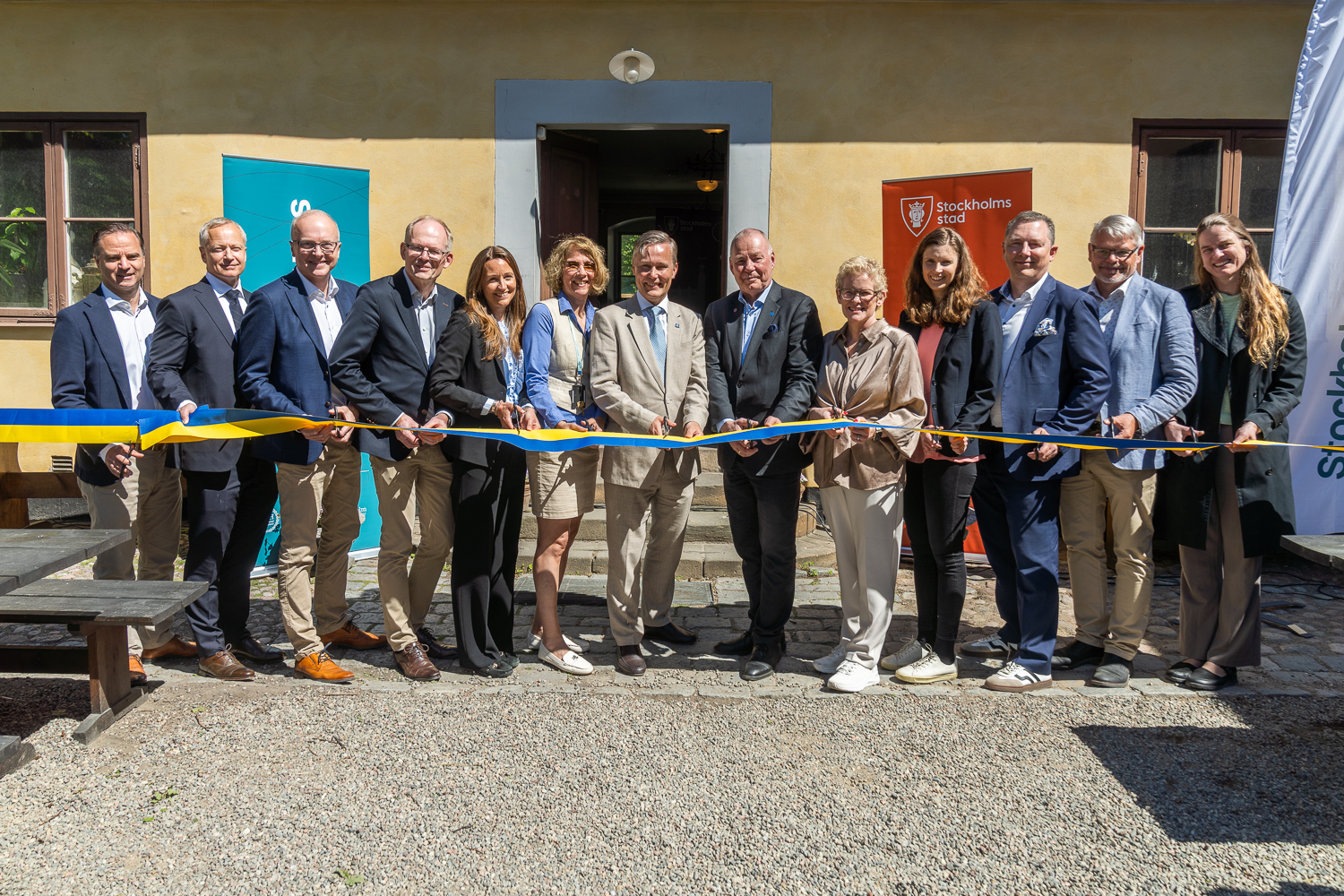
It is within this shared context that the Alliance of European Mayors and the Smart City Institute Japan have formalized collaboration through a Memorandum of Understanding establishing one more bridge between European and Japanese cities to enable structured exchange, joint learning, and the scaling of solutions across regions.
In this conversation with Takehiko Nagumo, Representative Director of Smart City Institute Japan we explore how Japan is responding to demographic pressure, why well-being is becoming a measurable policy goal, and what this collaboration can unlock for cities on both sides.
Japan is often described as a preview of the demographic future many developed countries will face. How are Japanese cities restructuring their urban systems to respond to an aging and shrinking population while sustaining economic vitality and quality of life?
Japan is one of the fastest-aging countries in the world. In addition, the population is rapidly declining, leading to a shrinking labor force across many industries. This trend is particularly visible in regional and rural areas, as younger generations are attracted to urban environments such as Tokyo.
Naturally, the national government takes this situation very seriously and has been implementing regional revitalization policies for more than a decade. However, the demographic trend continues to accelerate despite these efforts.
To address this challenge, regions and cities have been introducing a wide range of digital strategies. One example is the digitalization of public services through a national digital ID system called the “My Number” card. Today, more than 80% of the population holds a My Number card, which is gradually replacing the traditional health insurance card. Many public services, such as applying for residency or filing taxes, can now be completed electronically.
Beyond government services, digital technologies are increasingly integrated into daily life. Cashless payments, self-checkout systems, telemedicine, telework, MaaS, and autonomous community bus systems are becoming more common.
In addition, the introduction of AI is significantly increasing productivity across many sectors. We expect AI to become the next major wave of transformation, affecting almost every aspect of life.
We believe the experiences and insights Japan is gaining as the world’s most rapidly aging society can provide valuable lessons for other countries facing similar challenges.
What emerges is a gradual redesign of how cities operate where digital systems become a core layer of urban functionality.
Yet beyond systems and efficiency, Japan’s smart city evolution reflects a deeper shift in how cities define success.
Japan’s smart city journey has evolved over time, from technology-driven initiatives to a more human-centered approach. What has driven this shift, and how is well-being now being integrated into the way cities design and evaluate policy?
Japan has been promoting smart city initiatives for the past 10 to15 years.
In the early stages, these initiatives were largely technology-driven and often motivated by business opportunities. However, over time, we realized that citizens are not necessarily interested in technology itself. What they care about more is their happiness, their daily quality of life, and the livability of the cities they live in.
In the early 2020s, the Japanese government launched the Digital Garden City initiative, marking an important shift toward a more human-centered approach to smart cities. Within this framework, many cities have adopted the concept of human-centric smart cities supported by the “Liveable Well-Being City Indicator.”
This indicator is a unique combination of subjective and objective metrics that measure citizens’ well-being at the city level. The data are openly accessible online, 24 hours a day, 365 days a year, free of charge.
I consider this the beginning of what I call “well-being-based smart city policy design.” Today, more than 250 cities in Japan are actively using these indicators to design, implement, and monitor policies that improve citizens’ well-being.
We believe in the principle that “you can’t manage what you don’t measure.” Happiness and well-being should not remain abstract concepts. With appropriate indicators, they can be analyzed, incorporated into policy design, and systematically evaluated in terms of effectiveness and efficiency.As this thinking evolves, its relevance increasingly extends beyond national borders—particularly as cities across Europe begin to encounter similar pressures and questions.

As this thinking evolves, its relevance increasingly extends beyond national borders, particularly as cities across Europe begin to encounter similar pressures and questions.
With the collaboration between the Smart City Institute Japan and the Alliance of European Mayors now formalized, where do you see the most immediate opportunities for practical cooperation between Japanese and European cities?
Japan and Europe share fundamental liberal democratic values and face similar demographic challenges, particularly rapidly aging populations. At the same time, each region has its own strengths and weaknesses.
Innovation gives us hope, and technology can be a powerful tool to enhance people’s happiness and well-being, both today and in the future. Therefore, there is significant potential for cooperation between Japanese and European cities.
At a practical level, we can share ideas and solutions for everyday urban services such as local government administration, public transportation, education, healthcare, and communication infrastructure.
Beyond these foundational areas, more advanced fields of cooperation could include emerging technologies such as AI, digital twins, virtual reality, and what we call the “citiverse.”
Looking further ahead, we may also explore collaboration in space-related technologies. Concepts such as lunar smart cities could become an exciting new frontier for international cooperation.
Programs such as IURC already provide a strong platform for this type of collaboration, and I expect opportunities for closer cooperation to continue to grow in an increasingly dynamic global environment.
Looking ahead, what types of cities is Japan aiming to build over the next decade—and which elements of this vision could be most relevant for city leaders in Europe?
Cities in Japan are highly diverse, large and small, urban and rural, each with its own history and culture. Because of this diversity, I believe there is no single model for future cities.
Instead, I propose four archetypes for future smart cities.
The first is cognitive smart cities, driven by advanced AI technologies that support decision-making and improve urban services.
The second is biophilic smart cities, which emphasize harmony between urban life and the natural environment.
The third is local commons smart cities, which leverage social capital and community collaboration among citizens.
The fourth is lunar smart cities, which explore how smart city technologies and governance models developed on Earth could eventually be adapted for human settlement on the Moon.
Together, these archetypes form a mosaic-like landscape for future cities in Japan. Rather than a single uniform model, we envision a diverse ecosystem of cities, each developing according to its own strengths and identity.
I hope that Japan and Europe can collaborate in exploring these possibilities and work together to create cities that enhance happiness and well-being for future generations.
As cities move deeper into an era defined not only by technological capability, but by societal complexity, Japan’s evolving approach offers a valuable perspective: the future of cities will not be defined by a single model, but by the ability to align innovation with human well-being.
For European cities, the question is no longer whether to adopt technology but how to shape it in ways that reflect the lives, values, and expectations of the people they serve. Japan is certainly a path to look at.