Madrid Goes Big on AI to Manage Urban Nature
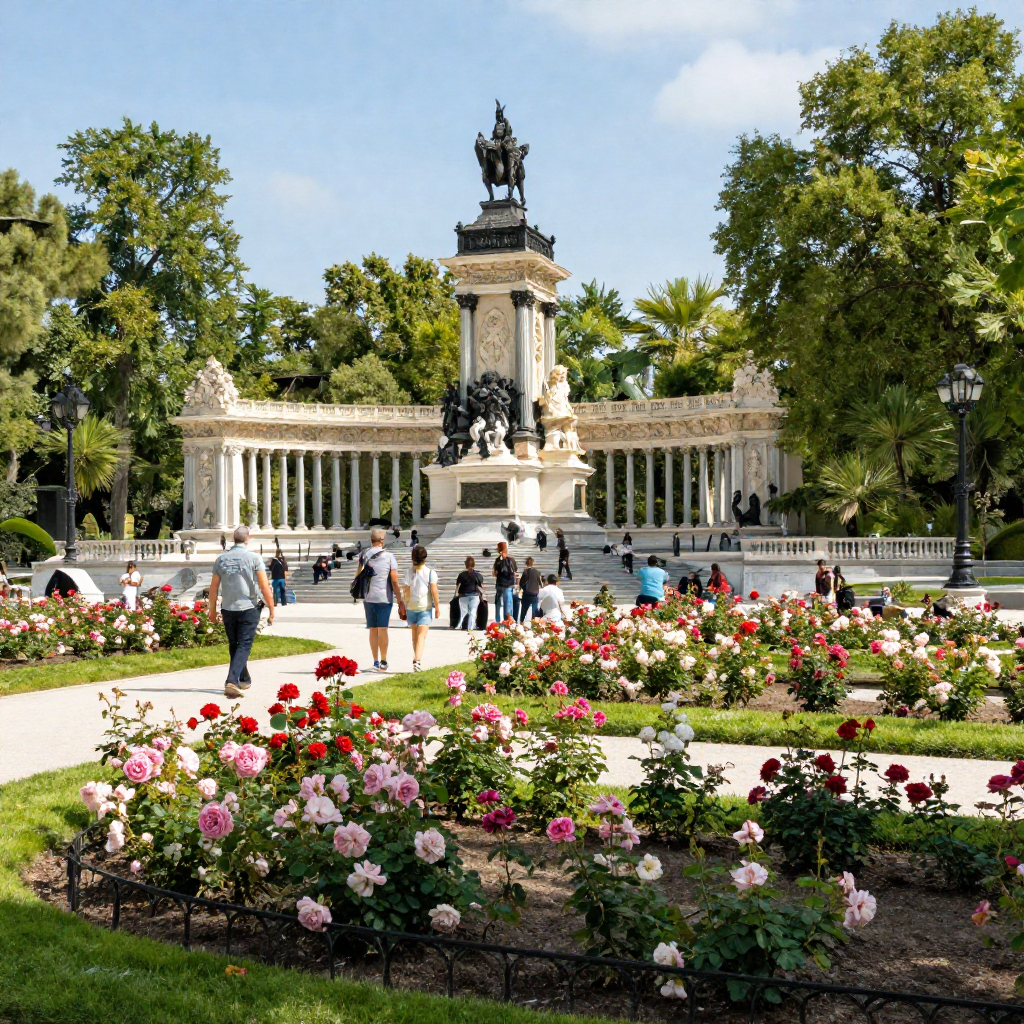
Madrid manages one of Europe’s largest urban green systems, spanning over 6,000 hectares of parks, gardens and green areas across more than 200 sites. This includes historic parks such as Retiro, large natural assets like Casa de Campo, and an extensive network of tree-lined streets embedded across the city.
Maintaining this system is a core operational responsibility, involving continuous irrigation, pruning, inspection, and plant health monitoring across a highly distributed and living infrastructure. It is also resource-intensive, supported by significant annual public expenditure exceeding €130 million on green infrastructure and environmental services.
Growing number of European cities have already tested AI in mobility, services, and administration.
Madrid is now applying it to something far less discussed – the management of urban nature itself.
The city has approved a €2.9 million contract to integrate artificial intelligence into the management of parks, green areas and municipal nurseries. The programme will run for 36 months starting February 2026, marking a shift from experimentation to structured, budget-backed deployment.
Rather than introducing a single tool, Madrid is building a data-driven operational layer for green infrastructure. The system will combine inputs from vehicle-mounted and fixed cameras, satellite imagery and environmental and operational datasets. These will be used to prioritise maintenance activities, optimise irrigation planning, monitor the phytosanitary condition of trees and plant life, support day-to-day decision-making of municipal teams.
What is emerging here is not simply a digital upgrade, but a different way of managing the city.
Green spaces are no longer treated as passive environments, but as operational assets, measurable, monitored, and actively managed through data.
Across Europe – from optimization to integration
Madrid’s move builds on a broader shift already visible across European cities.
In Barcelona, irrigation systems in public green areas are already optimised using environmental data such as soil conditions and weather patterns, reducing water consumption and improving efficiency.
In Rotterdam, detailed urban tree inventories allow municipalities to monitor the condition, risk levels and maintenance needs of thousands of trees, supporting more structured urban forestry management.
In Lyon, sensor-based systems are used to manage energy and water use in green districts, particularly in areas such as Confluence, where environmental performance is actively monitored.
These systems are operational and already delivering value. But they largely remain fragmented layers, irrigation, monitoring, inventory, rather than fully integrated operational systems.
What remains limited across Europe is the next step: turning these data layers into coordinated, intelligent management systems.
Madrid’s programme can be understood as part of this transition, an attempt to bring these elements together into a single operational framework.
Beyond Europe – where this is already embedded
Looking beyond Europe, cities like Singapore offer a glimpse of what this integration looks like at a more mature stage. Under its “City in Nature” approach, Singapore manages urban greenery through sensor networks, predictive analytics and centralized platforms, enabling real-time monitoring of environmental conditions, optimisation of irrigation and maintenance, early detection of risks to trees and vegetation.
Here, the management of green spaces is already embedded into daily city operations, supported by continuous data flows and predictive systems.

A shift in how cities manage nature
Madrid’s programme has not yet been deployed, and its real impact will depend on execution, from procurement to integration into municipal workflows. But the direction is clear.
Across cities, urban nature is no longer treated as a passive or purely environmental domain. It is becoming a climate asset, a cost centre, a managed system requiring intelligence.
As pressures increase, from climate adaptation to resource constraints, the question is how quickly cities managing nature with data becomes standard practice.