- en
Estonian city of Tartu marked Tartu Peace Treaty’s 102nd anniversary
The city of Tartu, led by mayor Urmas Klaas, celebrated the 102nd anniversary of the Tartu Peace Treaty on Wednesday.
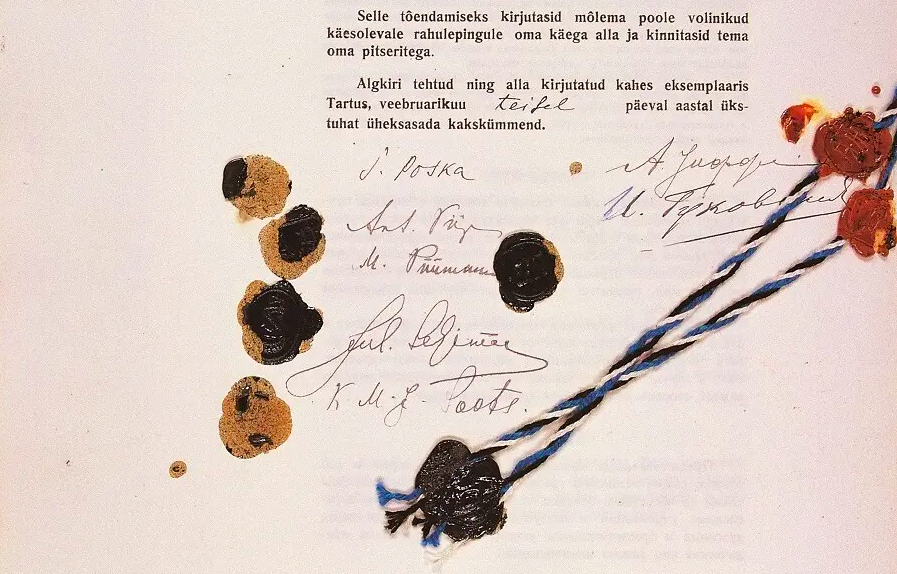
The Tartu Peace Treaty is the primary document that was signed and made the country of Estonia independent. It was an act that signed the end of the 1918-1920 Estonian War of Independence.
The Tartu Peace Treaty was signed by Estonian members of the Constituent Assembly: Jaan Poska, Ants Piip, Mait Püüman, Julius Seljamaa, and Maj-Gen Jaan Soots. The document was not signed unexpectedly or overnight.
When this document was signed, Estonia’s borders were established and the country became an independent state. The anniversary has been marked annually in free Estonia ever since.
Memorial wreaths were laid at the War of Independence Memorial in the Paulus Cemetery (Pauluse kalmistu).
Every year, the flag is raised at 8.00 a.m. on the marking of the anniversary, and it is always lowered at sunset around 4.37 p.m. in the city of Tartu, and three minutes later in the Estonian capital, Tallinn.
This marking of the important event was followed by speeches by high school students at Tartu Peace Square where students also placed candles.
The citizens were also able to visit exhibitions which were held on the anniversary at two major museums in Tartu: the city museum (Linnamuuseum) on Vene 17, and the Estonian National Museum (ERM), which has been hosting thematic exhibitions to mark this important day.
The city museum exhibition introduced the history of the Tartu Peace Treaty and the role of the city in peace talks, with the tapestry of the textile artist Anu Raud “Tartu Peace” on display, as well as a virtual showing of the Tartu peace negotiations, using the new 360-degree technology which allows the citizens who visit to feel like an observer of the negotiation process.
The permanent exhibition “Meetings” (“Kohtumised”) is held at the ERM, and it allows browsing the original Tartu Peace Treaty with the help of technology, more precisely a digital tablet. (photo credit: EV100)