Finnish cities Lahti and Espoo on top of bike paths per capita leaderboard
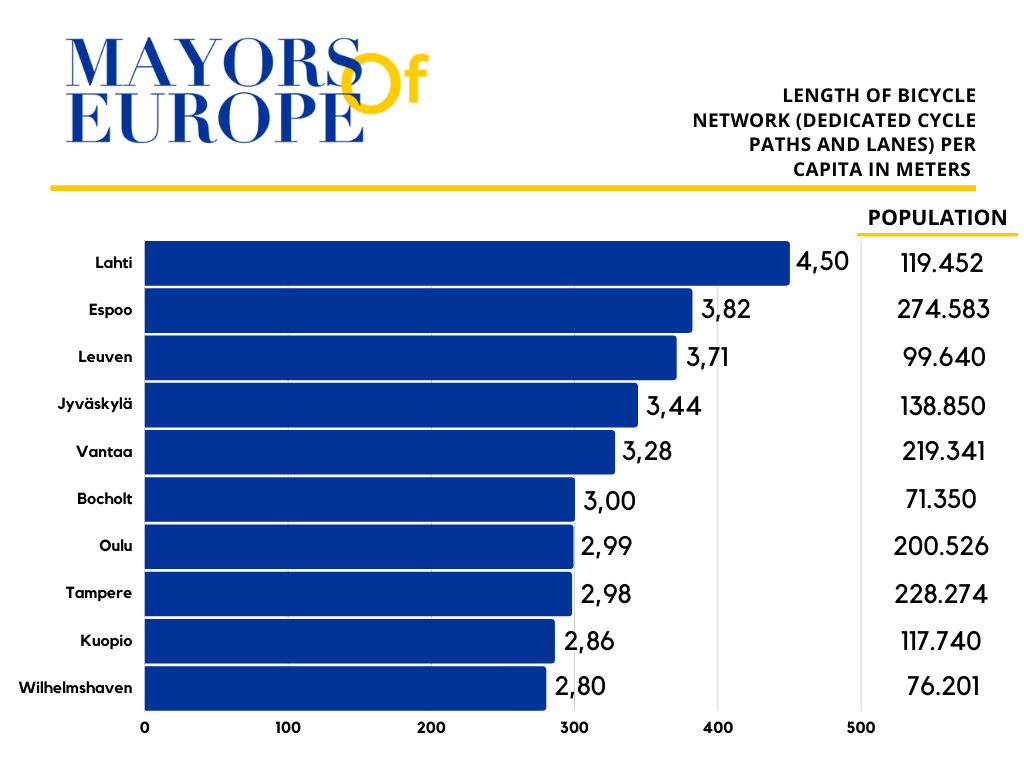
The last Eurostat data from 2017 (as shown on the graph) will change dramatically in post-COVID-19 statistics according to the trends of urban transport since the outbreak of the pandemic. The idea of packed buses and trains has been avoided in favor of active modes of transport, cycling in particular.
But let us go through a list of the most successful cities before the COVID-19 health crisis.
According to the analysis of Eurostat from 2017, three years ago Lahti (Lahtis) in the south of Finland situated on the shores of Lake Vesijärvi had the most bike paths per capita, with 119,452 citizens and total bike paths of 537 kilometers, or per capita. 4.5 meters. Again, Finnish city Espoo (Esbo) was statistically immediately next in the rankings, where 274,583 inhabitants to have the opportunity to use 1,050 km of bike paths or per capita – 3.82 meters.
In Leuven, Belgium, a traffic regulation plan introduced in 2016 led to a 32% increase in cycling in just one year, partly because of a car traffic ban through the center of one of the oldest and largest university cities with over 50,000 students. New traffic regulation has also resulted in better air quality, with carbon dioxide emissions being dramatically reduced in some areas. Leuven’s filtering car traffic out of the city center by closing short sections of the street to motorized traffic entirely, and introducing one-way flow for car traffic on selected sections of streets, with contraflow traffic permitted for cyclists and sometimes also busses, is at the essence of any excellent examples of traffic regulation plans across Europe that favor sustainable modes of mobility and help urban centers be pedestrian-friendly. Leuven’s 99,640 inhabitants, in 2017 had 370 kilometers of bicycle paths or 3.71 meters per capita.
In Jyväskylä (Finland), 138,850 residents have 478 km of bicycle paths, or 3.44 meters per capita, while in the metropolitan area of the Finnish capital Helsinki, in the city of Vantaa (Vanda) of 219,341 residents, have 720 kilometers of bicycle network, which is on average 3.28 meters per capita.
German Bocholt in 2017 had a total of 214 km of bike paths for 71,350 citizens, or precisely 3 meters per capita. In Oulu (again Finland), 200,526 residents can use 600 kilometers of bike paths, that averages 2.99 meters, while in nearby Tampere (Tammerfors) 228,274 residents in 2017 had a network of bicycle paths 681 kilometers, or 2.98 meters per capita.
Kuopio (Finland) with a population of 117,740 and 337 km of bike paths network, averaged 2.86 meters per capita, while Wilhelmshaven (Germany) with 76,201 inhabitants, managed to enter Top 10 in the 2017 Eurostat survey with a total of 213 kilometers of cycle paths, or an average of 2.80 meters per capita.
COVID-19 impacts on urban mobility
Commuters fearful of public transit, fitness enthusiasts locked out of gyms, and families going crazy inside their homes during the coronavirus pandemic have created a boom in bicycle sales unseen in decades.
In terms of distance undertaken for commuting, 36.2% of Europeans travel fewer than 10 km are making a switch to walking and cycling as a feasible option.
According to Eco-Counter, the most significant growth of cycling (October 2020 vs. October 2019) was seen in Italy 48,4 % and Portugal 34,4%, followed by Finland (18,8%), Sweden (18,8%), and France (16,8%).
This is an example of a great incentive for people to choose more cost-efficient forms of transportation that benefit their health but at the same time have also a positive impact on the environment.
More than one billion euros has been spent on cycling-related infrastructure and 2,300 km of new bike lanes have been rolled out since the pandemic began.
According to ECF (European Cyclists’ Federation):
- 37 out of 94 biggest EU cities announced or implemented COVID cycling measures
- 40 out of 89 European metropolitan cities announced or implemented COVID cycling measures
- 17 out of 47 European capitals announced or implemented COVID cycling measures
Every crisis is an opportunity
Endless studies have shown the health benefits cycling can have on people’s well-being, from reducing cardiovascular diseases, tackling diabetes, and improving people’s mental health. Beyond the health case for cycling for each individual, there is also the environmental impact.
The cities known for car-clogged streets, like Berlin, Milan, or Rome, install bike lanes to accommodate surging interest in cycling while public transport remains limited.
If we are to bring all greenhouse gas emissions to net-zero by 2050, now is the opportunity to reset cities’ transportation strategy. A growing number of national, regional, and local authorities in Europe have turned to cycling as a mobility solution that simultaneously addresses issues linked to public health, the environment, and congestion.
Fit-for-purpose infrastructure can ensure that the current rise in cycling is nurtured and maintained for the long haul. The outbreak of this pandemic is offering an opportunity for urban planners, businesses, and governments to collaborate and reset how they map out and improve their cities’ cycling infrastructure.
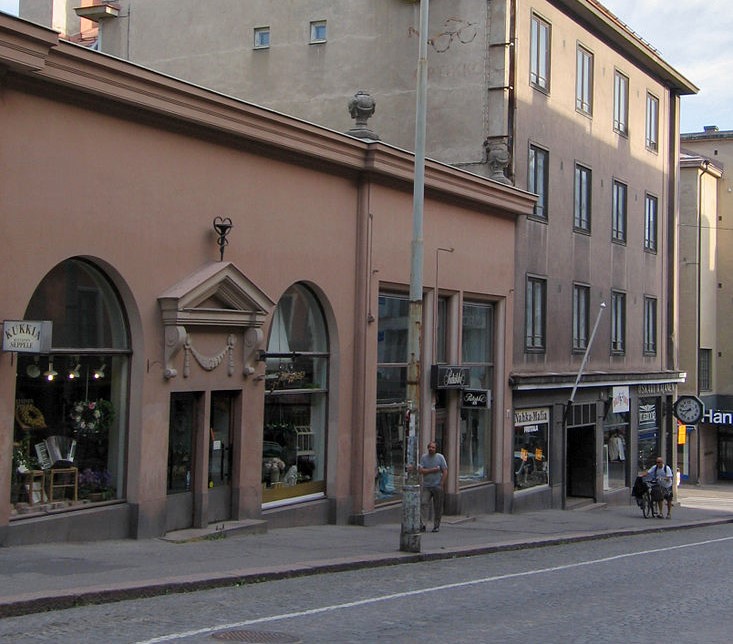
photo: Tomi Hokkanen / CC BY-SA 3.0