Real Estate as the Footprint of Urban Life: The Edge
InterviewsScience and the city
by Sila Egridere, Architect and Smart City Expert
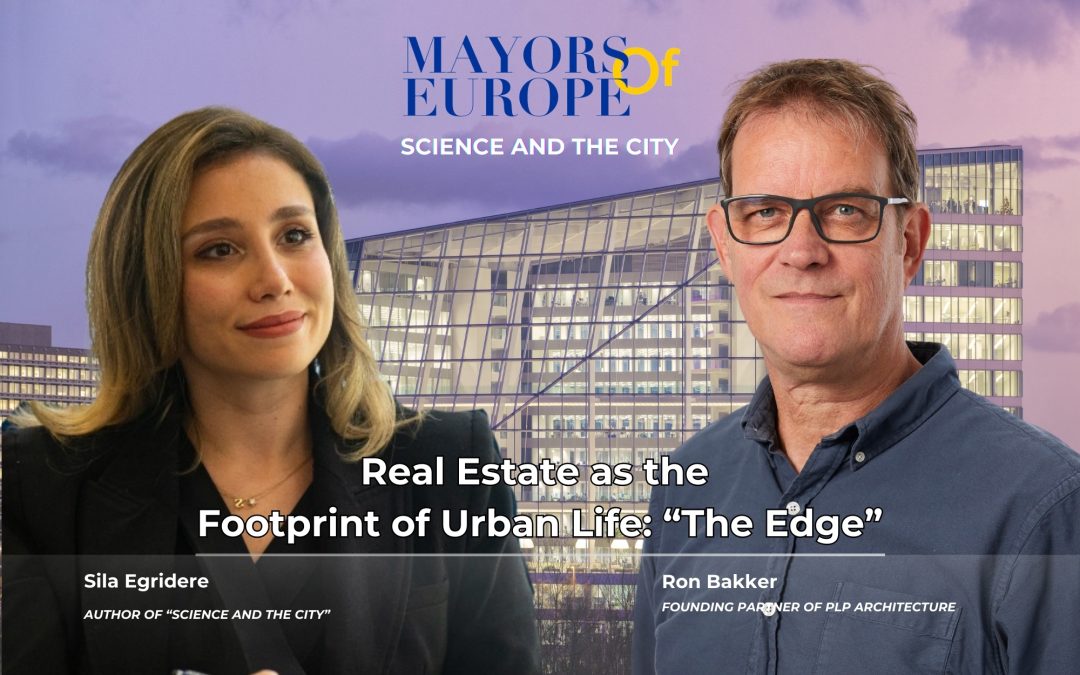
This article is based on a conversation with Ron Bakker and examines what the smart building agenda has delivered and where it has fallen short. Bakker is a founding partner of PLP Architecture, an international practice working across large-scale commercial and mixed-use developments.
What makes Bakker’s perspective relevant today is not the scale of his projects, but his willingness to question outcomes. Instead of defending the smart building narrative, he reflects openly on how expectations evolved, where learning stalled, and what architecture can realistically contribute to healthier, more functional cities.
To understand how the future of urban life is taking shape, we need to look beyond master plans and policy frameworks and focus on something far more concrete: real estate as the footprint of daily urban behaviour.
How people work, move, meet, consume, and spend time is increasingly reflected in how buildings are designed, operated, and valued. Shifts in real estate performance are often the earliest and most tangible signals of how cities are changing. Buildings are not just containers of urban life. They are one of its clearest feedback mechanisms.
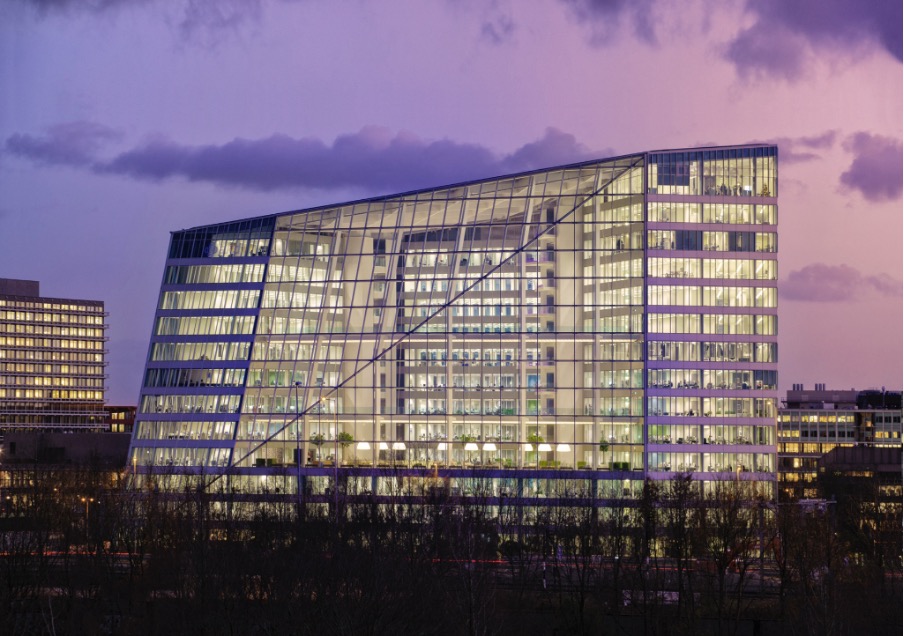
Edge North Facade ©Ronald Tilleman
From gadgets to operating systems
When smart cities are discussed, attention often gravitates toward tools: dashboards, apps, sensors, digital twins. Yet some of the most consequential transformations are happening at a more grounded scale, inside buildings themselves.
The Edge is frequently referenced in this context, not because it showcases futuristic gadgets, but because it reframes smartness as an operating logic rather than a technical add-on.
Smartness at The Edge was conceived as a system shaping how space is used, how energy flows are managed, and how daily decisions are made. Technology was embedded into routine choices, not layered onto architecture as a symbolic gesture. This approach reframed the building from a passive consumer of urban resources into an active participant in urban systems.
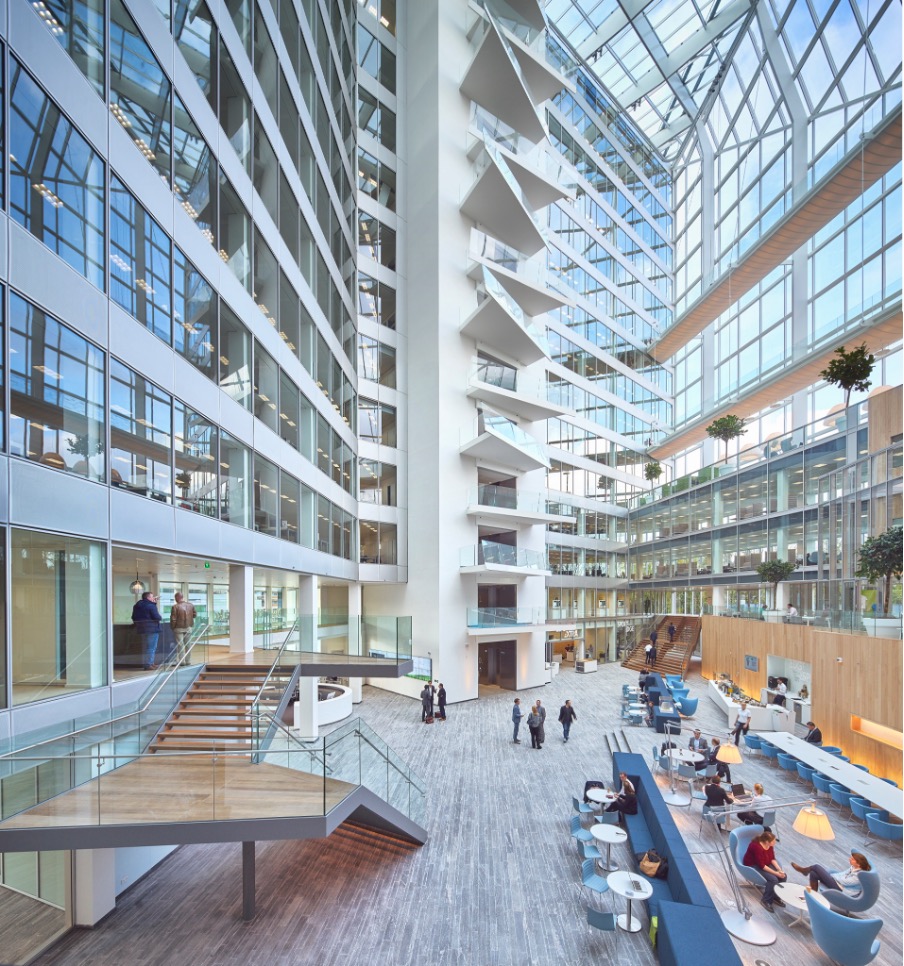
Edge Atrium ©Ronald Tilleman
What the “smart building” narrative missed
In conversation with Bakker, The Edge appeared less as a success story and more as an honest point of reflection on what smart buildings have achieved.
Looking back, he questions how the smart building agenda developed after the project. The issue was not a lack of ambition, but a persistent focus on potential rather than outcomes. Data collection was widely celebrated, yet it was rarely used to create long-term learning or better decisions. Even years later, it remains difficult to understand how buildings perform once people move in clearly.
The lesson is not that smart systems failed. It is that technology alone does not improve buildings or cities. Without clear goals, shared responsibility, and a culture of learning from use, digital systems remain superficial.
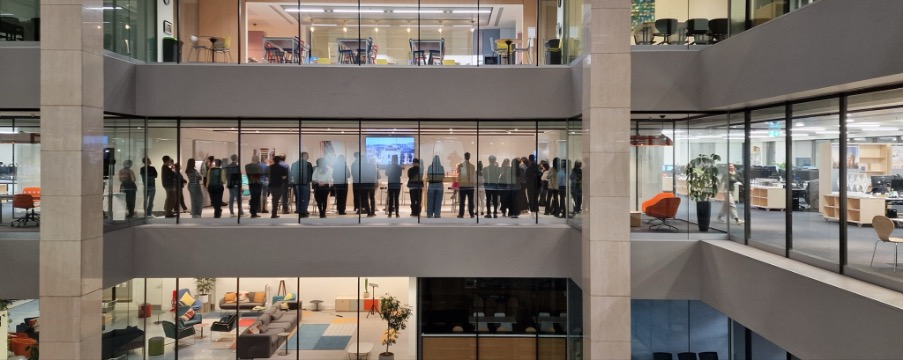
PLP Office, Ron Bakker
Smartness as behavioral intelligence
Where The Edge still offers a valuable model is in how it connects human behavior, comfort, and energy use.
Rather than focusing on novelty, the design explored how people could be guided toward better spatial choices throughout the day. By linking weather conditions, solar exposure, occupancy patterns, and user preferences, a building can support comfort while reducing energy demand. Energy is saved not through restriction, but through informed choice.
This logic extends beyond energy and technology and into the physical experience of space itself.
One of the most overlooked aspects of building performance is not digital, but sensory. While daylight is frequently discussed, acoustics rarely receives the same attention. Yet in large interior public spaces, acoustic conditions often determine whether a space feels calm or stressful, social or overwhelming.
Spaces where many people can gather without noise becoming oppressive support interaction, concentration, and wellbeing. This kind of comfort is not achieved through isolation or control, but through careful spatial design. Despite its impact on how people actually experience buildings, acoustic performance remains systematically underestimated.
This represents a different understanding of smartness. It is not about automating everything, but about aligning human experience with environmental performance.
The decision that made everything else possible
One of the most influential decisions at The Edge was neither architectural nor technological. It was organizational.
Deloitte was involved from the beginning as a long-term tenant, committing to a 15-year lease. That time horizon changed the logic of investment. Solutions that increased upfront cost but reduced long-term operational expenses became viable. Sustainability and digital systems were justified as performance decisions, not marketing features.
For cities and developers, the lesson is clear. If buildings are expected to perform better over time, contracts and incentives must reward long-term outcomes, not first-day delivery.
Why real estate now sits at the center of smart city strategy
As cities move toward 2026, smart city development is no longer defined by individual technologies, but by how systems are connected across scales.
Building systems are increasingly linked to tenant experience, portfolio management, district infrastructure, and city-wide sustainability goals. Real estate is no longer treated as a static asset that consumes urban services. It is managed as an operational platform that interacts continuously with its surroundings.
In this context, real estate is no longer outer to smart city strategies. It has become one of their central mechanisms.
Cities, trust, and the limits of technology
This shift brings responsibility. Digital systems can help cities understand where conditions fall short and how they can improve. But without clear intent and governance, they can just as easily undermine trust.
Data collected to improve comfort, health, and efficiency serves the public good. Data collected without purpose, or repurposed for control, erodes legitimacy. Smart cities succeed through collaboration and transparency, not surveillance.
What real smartness actually requires
More sensors or more dashboards will not define the next phase of smart cities. Better questions will define it.
Do buildings open themselves to urban life or insulate themselves from it?
Do they improve health, comfort, and everyday experience, not just efficiency metrics?
Do they reduce carbon because they operate differently, not because they display targets?
Do they learn over time and feed that learning back into design and governance?
The Edge remains relevant not because it offers a finished model, but because it exposes where the real work still lies.
Smartness is not a label. It is a relationship.
Between people and space.
Between buildings and streets.
Between real estate and trust.